How to Choose a Biohazard Bin?
Choosing a biohazard bin is not simply a matter of selecting the largest container available. The right option depends on the waste type, collection frequency, room layout, and the people handling it. A small clinic may need a compact, foot-operated bin near an examination table. A laboratory may require a rigid, puncture-resistant container for contaminated sharps. These settings create different risks.
Look for clear biohazard labeling, a secure lid, and a stable base. Leak-resistant construction matters when liquid contamination is possible. The opening should limit hand contact and prevent waste from falling back out. For needles and other sharps, choose an approved sharps container instead of a standard bag-lined bin. Check whether the product follows recognized healthcare guidance, manufacturer testing, and local waste-handling requirements. Rules can vary, so assumptions are risky.
Think about the full handling process. Staff should move the container without touching contaminated surfaces. Replacement liners should fit properly and remain below the fill line. A reliable supplier should provide specifications, cleaning instructions, and disposal guidance. The cheapest bin may become expensive if it tips, leaks, or needs early replacement. Small details matter.
There is no perfect choice.
Even experienced teams can overlook workflow. Before ordering, observe where waste is created, how far staff carry it, and when collection occurs. Then compare capacity, closure design, material strength, and total operating cost. A practical choice protects workers, visitors, and waste handlers while supporting consistent infection-control practices.
What Makes a Biohazard Bin Different from an Ordinary Waste Container?
How to Choose a Biohazard Bin?
A biohazard bin differs from an ordinary waste container in design, not just color. It is made for waste that may contain blood, body fluids, cultures, or contaminated materials. Its walls resist leaks, its opening limits hand contact, and its lid helps prevent accidental exposure.
Sharps require a rigid, puncture-resistant container. A thin plastic bag is not enough. It can tear beside a sink or under a loaded trolley.
The World Health Organization reports that about 15% of healthcare waste is hazardous, while the remaining 85% is generally non-hazardous.
That figure explains why segregation matters. Mixing a small amount of contaminated waste with ordinary trash can change the handling risk of the entire container.
WHO also estimates that high-income facilities may generate up to 0.5 kilograms of hazardous waste per hospital bed daily. A bin should therefore match the waste stream, expected volume, closure method, and collection frequency.
A bright red lid alone proves little. The UN Environment Programme has repeatedly linked poor healthcare waste management with infection and environmental risks.
One practical weakness remains: users often overfill containers when space is limited. Clear fill lines, foot-operated lids, secure liners, and staff training reduce that mistake.
The safest choice is not always the largest bin.
How to Classify the Biohazardous Waste You Need to Discard
How to Choose a Biohazard Bin?
Classifying waste correctly is more important than choosing the largest bin. Start by identifying what the waste contains, its physical form, and its main hazard.
Sharps need a rigid, puncture-resistant container. This includes needles, broken glass, and contaminated blades. Never place them in a soft medical-waste bag. Place blood-soaked gauze, gloves, and disposable gowns in a leak-resistant biohazard container. Keep liquids in sealed, leakproof containers with suitable secondary containment. Human or animal tissues may require separate handling under your facility’s procedures.
Some waste has more than one hazard. A vial containing infectious material and chemicals should not enter an ordinary infectious-waste stream. Chemical, pharmaceutical, or radioactive hazards may require different controls. Check the safety data sheet and your site’s waste policy before selecting a bin. Color codes are not universal. Confirm the meaning locally.
The container should match the waste volume. Leave space for safe closure. Do not force down gloves or sharps. I have seen overfilled bins create avoidable handling risks. That mistake is easy to repeat when a replacement bin is far away. Place bins near the point of use, but keep them stable and clearly labeled. If the classification feels uncertain, pause and ask the responsible safety professional. Guessing saves seconds, but it can compromise the entire disposal process.
How to Choose the Right Biohazard Bin Size and Material
How to Choose a Biohazard Bin?
How to Choose the Right Biohazard Bin Size and Material
Choosing a biohazard bin starts with the waste stream, not the room size. Estimate the waste produced during each shift, then select a container that can be removed before it reaches the fill line. A small bin suits treatment rooms with limited waste. Larger bins may work in laboratories, but they can become heavy and difficult to move. Bigger is not always better.
Material matters. Rigid polypropylene or high-density polyethylene can resist punctures, leaks, and many common cleaning chemicals. For needles or other sharps, use a dedicated puncture-resistant container with a secure closure. Never place sharps in a soft waste bag. Check the bin’s temperature and chemical-resistance guidance, especially when waste may be warm or damp. A tight lid helps contain odors and reduces accidental contact. Clear labeling and a visible biohazard symbol also support safer handling. Color systems can vary, so relying on color alone is a weak practice.
Tips: Measure the available floor space first. Keep the opening within easy reach. Choose a smaller container if staff must carry it far. Do not overfill it. Inspect lids, seams, and mounting points regularly, because a minor crack can become a serious problem. Ask your waste-management professional to verify capacity, closure, and disposal requirements for your facility.
Which Safety Features Should a Biohazard Bin Include?
Choosing a biohazard bin starts with the material entering it, not its color. A container for needles needs rigid, puncture-resistant walls and a narrow opening. Soft contaminated items require a leak-resistant body with enough space for safe closure. In practice, the wrong opening encourages overfilling. That small mistake can expose hands during removal. Look for a clear fill line, durable hazard labeling, and a stable base that will not tip beside a workbench.
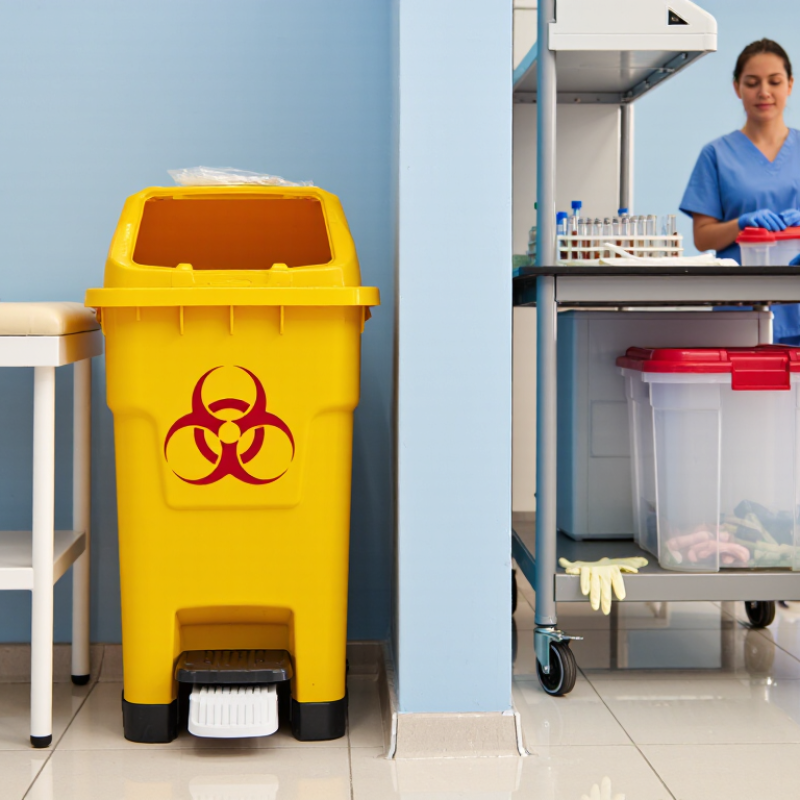
Hands-free operation is another important safety feature. A foot pedal or touchless lid reduces contact with contaminated surfaces. The lid should close securely and remain closed during internal transport. Some facilities also need temporary locking features, especially when bins move through busy corridors. Check whether the container matches the approved disposal process. Compatibility matters. A bin designed for one treatment method may not suit another. Manufacturer instructions and local waste procedures should guide that decision.
Good visibility supports safer behavior. Staff should see the fill level without opening the container. Labels must remain readable after exposure to moisture and cleaning agents. Rounded edges can reduce snagging, while a recessed handle may make carrying more controlled. A common lesson from routine inspections is that “large capacity” is not always better; heavy bins are harder to move safely. Review placement, user reach, and collection frequency before selecting the final size. Reassess the setup after near misses or workflow changes.
How to Choose a Biohazard Bin? Which Safety Features Should a Biohazard Bin Include?
Choose a bin according to the waste stream. Regulated biohazard waste generally requires a closable, leak-resistant, labeled or color-coded container. Sharps require a rigid, puncture-resistant container, while liquid cultures may require secondary containment to reduce spill risk. Requirements can vary by local regulations and facility procedures.
The chart uses an applicability index: 1 means the feature should be included for that waste stream, and 0 means it is not generally the primary container requirement. The criteria reflect common OSHA and CDC biosafety guidance.
How to Place, Label, Close, and Dispose of a Biohazard Bin
How to Choose a Biohazard Bin?
How to Place, Label, Close, and Dispose of a Biohazard Bin
Choosing a biohazard bin starts with the waste stream, not its color. Select a rigid, leak-resistant container for contaminated materials. Use puncture-resistant containers for sharps.
The World Health Organization reports that about 15% of healthcare waste is hazardous. The remaining 85% still needs disciplined segregation. That distinction prevents ordinary waste from entering a regulated stream.
Place the bin near the point of use, such as beside a treatment surface. Keep it stable, upright, and away from food, public walkways, and heat. Staff should not carry exposed waste across a room. Label the container with the biohazard symbol and its waste type. Include the opening date when local procedures require it.
OSHA estimates that 5.6 million U.S. workers face occupational bloodborne-pathogen exposure, so a readable label is a practical safety control.
Close the bin before removal, and never compress its contents by hand. Never force waste inside. A half-full container is usually safer than an overfilled one.
Place sealed containers in approved secondary packaging when leakage is possible. Trained personnel should move them using documented procedures and authorized disposal services.
Follow local requirements, because disposal rules differ by location. A label can be technically correct yet still fail in dim light.
I have found that simple checks are often skipped. Inspect the lid, label, fill line, and outer surface before collection. Small details matter.