Top 10 Organic Dandelion Extract Suppliers for Global Buyers
Sourcing Organic Dandelion Extract requires more than comparing prices, package sizes, or polished supplier websites. Global buyers need reliable evidence behind every botanical claim, batch number, and certificate. The plant’s identity should be confirmed as Taraxacum officinale, with the used part clearly stated. Root, leaf, and whole-plant extracts can differ in composition, taste, and application.
Herbal medicine expert Dr. Michael Balick has emphasized, “Plants connect health, culture, and conservation.” That perspective matters when evaluating suppliers across different regions. Responsible sourcing should consider cultivation practices, harvesting conditions, traceability, and environmental pressure. A dependable supplier should provide a current certificate of analysis, microbiological results, heavy-metal screening, pesticide testing, and stability information. Solvent details also deserve attention. They are easy to overlook.
Small details matter.
This guide, Top 10 Organic Dandelion Extract Suppliers for Global Buyers, examines manufacturers through practical procurement criteria. These include organic certification, extraction technology, production capacity, quality systems, documentation, minimum order quantities, packaging, and export experience. Supplier communication is another useful signal. Clear answers often reveal stronger internal controls.
No ranking is perfect.
Organic certification alone does not guarantee consistent extract quality. Buyers should verify certificates with issuing bodies and request representative samples before signing long-term agreements. Regional import rules, labeling requirements, and permitted health claims must also be checked independently. The following supplier overview aims to support careful decisions, not replace technical or regulatory due diligence. That distinction is important, especially when one attractive specification hides an unresolved weakness.
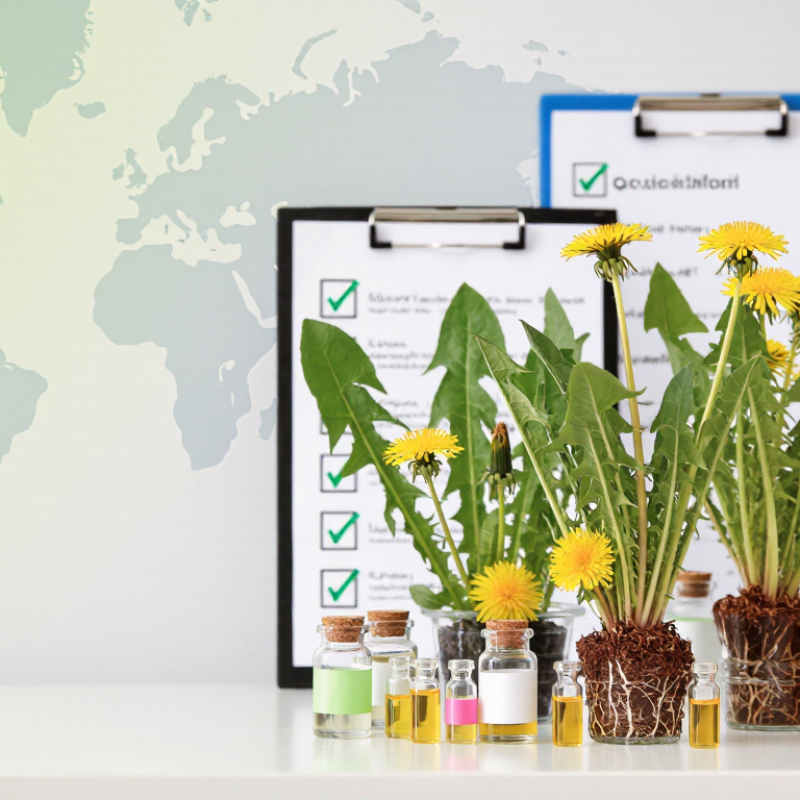
Definition and Uses of Organic Dandelion Extract
Organic dandelion extract is a concentrated preparation made from organically cultivated Taraxacum officinale. The extract may use roots, leaves, flowers, or a controlled blend of plant parts. Water or food-grade ethanol commonly removes selected plant compounds. The final material appears as a brown powder, liquid, or dry granule.
Its uses are practical and varied. Food manufacturers add it to herbal teas, functional drinks, and botanical blends. The root can provide a roasted, bitter flavor in caffeine-free beverages. Leaf extracts may suit capsules or powdered formulations, where mild herbal notes are acceptable. Cosmetic developers sometimes include it in botanical skincare formulas. These applications require compliant ingredient lists and suitable safety assessments.
Quality depends on more than an organic label. Buyers should request certification documents, botanical identity tests, pesticide screening, heavy-metal results, and microbiological reports. Extraction ratios and solvent details also affect consistency. Organic certification may differ between countries, so its scope deserves careful review. In practical sourcing, batch records and storage conditions often reveal problems before testing does. This part is easy to overlook. Extract color can vary naturally, but unexplained changes may indicate processing issues. Dandelion extract is not automatically standardized, medicinal, or suitable for every consumer. Clear specifications, realistic claims, and current regulatory checks support safer international purchasing.
Top Organic Dandelion Extract Suppliers by Market
Top Organic Dandelion Extract Suppliers by Market
North American suppliers often provide standardized extracts, detailed certificates of analysis, and flexible packaging for supplement manufacturers. Buyers should verify organic certification, botanical identity, solvent residues, heavy metals, and microbial limits. A polished specification sheet is useful, but it is not proof of consistent production. Requesting recent batch records can reveal differences between promised and delivered quality.
European suppliers commonly emphasize traceability, sustainable harvesting, and strict documentation. Their materials may include harvest regions, extraction ratios, and allergen statements. This detail supports professional procurement decisions. However, higher documentation standards do not always mean better extract performance. Compare active-marker testing, shelf-life data, and storage conditions before selecting a long-term partner.
Asia-Pacific suppliers can offer competitive pricing, large production capacity, and diverse extraction technologies. Some facilities specialize in water extraction, while others use alcohol-based processes. Buyers in Latin America and the Middle East may prefer suppliers with export experience, multilingual documents, and reliable climate-controlled shipping. Check customs paperwork carefully. Small errors can delay a shipment for weeks. Across every market, assess audit results, sample consistency, payment terms, and communication speed. The weakest point may be overlooked: a responsive salesperson cannot replace independent quality verification.
Top 10 Organic Dandelion Extract Suppliers by Market
Estimated 2024 demand distribution for organic dandelion extract across major buyer markets.
The figures represent indicative market shares by destination market, based on consolidated public market research patterns for botanical extracts and organic herbal ingredients. They are intended for comparative visualization rather than audited supplier sales data.
Product Quality, Certifications, and Supply Capacity
Top 10 Organic Dandelion Extract Suppliers for Global Buyers
Product quality begins with the root, not the finished powder. Buyers should request the botanical name, plant part, harvest region, extraction solvent, and batch test results. Traceability matters. The 2024 FiBL and IFOAM Organic Industry Survey reported global organic retail sales of approximately €135 billion in 2022. This expanding market increases pressure on suppliers to prove organic integrity, rather than simply print the word “organic” on packaging.
A reliable supplier should hold certification from an accredited organic authority and provide current certificates for the actual processing site. ISO 22000 or HACCP systems should cover allergen control, sanitation, foreign materials, and microbial risks. Independent testing should verify pesticide residues, heavy metals, identity, microbial counts, and extraction markers. The WHO Guidelines on Good Agricultural and Collection Practices emphasize correct plant identification and controlled harvesting. That is important for dandelion, where root quality can vary with soil and season. A certificate alone is not enough.
Supply capacity needs practical evidence. Ask for annual production volume, minimum order quantity, lead time, reserve inventory, and backup drying or extraction sites. Suppliers serving global buyers should explain packaging protection, shelf-life data, and export documentation. Capacity matters. A supplier may promise ten tonnes, yet fail during a poor harvest. This is where buyers should remain cautious. I would compare three recent batch records, not one attractive sample. Published market reports offer useful direction, but they cannot replace an audit, a retained sample, and clear communication with the production team.
How Global Buyers Can Select the Right Supplier
A top-ten list of organic dandelion extract suppliers is useful only when selection criteria are clear. Global buyers should examine certification scope, extraction methods, and batch consistency. The FiBL and IFOAM 2024 report recorded 96.4 million hectares of certified organic farmland and more than €134 billion in global retail sales in 2022. This growth increases demand, but it also requires stronger supplier verification.
Request current organic certificates, audit reports, and a complete certificate of analysis for each batch. The report should cover pesticide residues, heavy metals, microbial limits, moisture, and marker compounds. An ISO/IEC 17025-accredited laboratory adds credibility. Buyers should also check whether the certificate covers the actual processing site, not only the farm. Traceability should reach the harvest area and extraction date. A polished website is not evidence. I would not trust it alone.
Tips: Compare three recent batches, not one sample. Confirm the extraction solvent and carrier materials. Ask how suppliers control root identity and storage humidity. Review packaging photographs and transport conditions. The supplier should explain corrective actions when results fail specification. Small details matter. One weak document can reveal a weak system. Buyers should also clarify minimum order quantities, lead times, customs documents, and organic labeling rules in the destination market. These checks may slow purchasing, but skipping them creates greater cost later.
