Customer Service

How to Choose the Right Manhole Cover in 2026?

Choosing the right Manhole cover in 2026 requires more than comparing prices or selecting the heaviest model. A cover sits above traffic, rainwater, utilities, and daily maintenance work. Its failure can create noise, flooding, injury risks, or expensive road repairs. The correct choice begins with the site.

Consider the opening size, installation depth, traffic loading, drainage conditions, and expected maintenance frequency. A quiet residential lane needs different performance from an airport access road or industrial yard. Ductile iron, galvanized steel, composite, and reinforced concrete each offer practical advantages. However, material names alone do not prove suitability. Verify load ratings, dimensions, locking systems, anti-slip surfaces, and resistance to corrosion. Check the test documentation.

Details matter.

A reliable selection process should use current manufacturer data, qualified engineering advice, and applicable local standards. Inspectors should confirm that the frame sits evenly, the cover does not rock, and surrounding pavement supports the load. A few millimeters of movement may become loud impact damage after months of traffic. Water trapped around the frame can expose weaknesses that were invisible during installation.

There is no universal best cover. That assumption is convenient, but wrong. Even a technically certified product may perform poorly when installed on a weak base or maintained irregularly. This guide compares the main options, explains practical selection criteria, and highlights mistakes that project teams often overlook. The goal is simple: choose a Manhole cover that remains safe, stable, serviceable, and appropriate for its real environment in 2026.
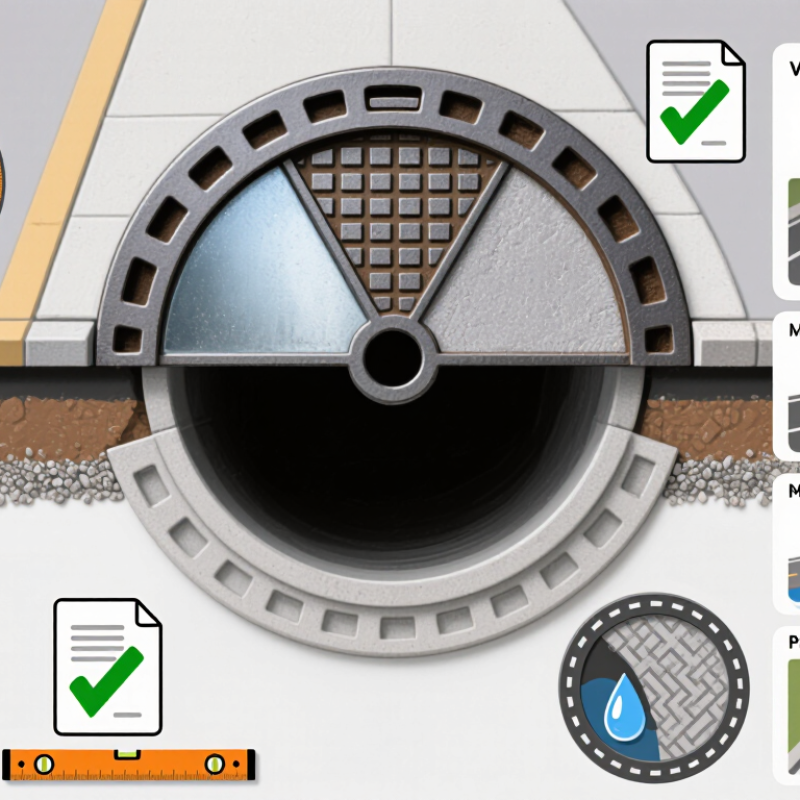
How to Choose the Right Manhole Cover in 2026?

Understanding Manhole Cover Types and Their Intended Uses

How to Choose the Right Manhole Cover in 2026?

Understanding the cover type is more important than choosing the heaviest option. A pedestrian walkway may need a lightweight, slip-resistant cover with a plain or patterned surface. It should remain stable under bicycles, wheelchairs, and maintenance carts. Solid covers suit areas where debris, rainwater, or odors must stay outside the chamber.

Ventilated covers allow air movement through drainage or utility spaces. However, their openings need careful sizing. Small objects can enter, while oversized openings may create hazards for heels or bicycle wheels. Hinged designs improve access because the cover stays attached during inspection. Locking systems are useful in public areas, especially where unauthorized opening could create danger.

Road installations require covers rated for the traffic above them. A quiet residential lane differs from a bus route or loading area. Engineers should check the expected wheel loads, installation depth, frame support, and relevant local standards. A cover can fail because of poor bedding, not weak metal. That detail is often missed.

Recessed covers accept paving materials and blend into plazas or courtyards. They look refined, but lifting them may require special tools. Composite covers can reduce weight and corrosion concerns, yet their long-term performance depends on temperature, impact, and maintenance conditions. Field measurements matter. A drawing rarely shows every uneven edge, damaged frame, or recurring flood path. One practical lesson deserves attention: the correct cover is chosen for its environment, not its appearance.

How to Choose the Right Manhole Cover in 2026?

Understanding Manhole Cover Types and Their Intended Uses

This chart shows the EN 124 load classes and their standardized test loads. A15 is generally intended for pedestrian and landscaped areas, while B125 is commonly used in pedestrian zones and car parks. C250 suits areas near kerbs, D400 is designed for carriageways and heavy vehicle traffic, and E600 and F900 are intended for industrial areas, ports, airports, and other locations exposed to very heavy loads. Select the cover according to the actual traffic conditions and installation environment.

Assessing Load Ratings, Materials, Sizes, and Safety Requirements

How to Choose the Right Manhole Cover in 2026?

Assessing Load Ratings, Materials, Sizes, and Safety Requirements

A manhole cover must match its real location, not only its drawing. A driveway, footpath, and busy road create very different loading conditions. Check expected traffic, wheel positions, impact forces, and installation quality before selecting a load rating. A stronger cover cannot compensate for a weak frame or poorly prepared base. On site, I measure the clear opening and frame seat twice. Small errors can cause rocking, noise, or dangerous movement.

Material selection depends on the environment. Ductile iron suits heavy traffic and frequent access, while steel may require stronger corrosion protection. Composite materials can reduce weight, but their long-term performance needs careful verification. Near seawater, chemicals, or standing water, review corrosion resistance and drainage details. The cover should sit evenly, resist slipping, and remain manageable for trained maintenance workers. Heavy does not always mean safer.

Size deserves equal attention. The clear opening must allow inspection and emergency access, while the frame must fit the chamber precisely. Check hinge direction, locking arrangements, ventilation needs, and surface markings. Local construction requirements and traffic regulations should guide the final choice. An engineer or qualified inspector should confirm the design when loads are uncertain. I have seen specifications look complete, yet ignore lifting space or flood pressure. That is an easy mistake to repeat. Record the selected rating, material, dimensions, installation method, and inspection schedule before delivery.

Matching the Cover Design to Traffic, Drainage, and Site Conditions

How to Choose the Right Manhole Cover in 2026?

Traffic classification should come before appearance. Under EN 124-2:2015, A15 covers withstand 15 kN, while D400 covers withstand 400 kN. A pedestrian garden needs a different design from a bus lane or logistics yard. The FHWA Traffic Monitoring Guide also recommends checking vehicle classes and axle loads, not traffic counts alone. A quiet road today may carry heavier vehicles after redevelopment.

Drainage conditions deserve equal attention. The 2021 ASCE Infrastructure Report Card rated U.S. stormwater infrastructure C−, showing how aging drainage systems increase local flood pressure. Select covers with suitable openings, controlled water entry, and secure seating. In low areas, a vented or sealed design may be appropriate, depending on hydraulic calculations. Hinges, locking systems, and anti-slip surfaces also matter where standing water is common. Small details matter.

Site conditions can quietly defeat a good specification. Coastal air, de-icing salts, clay soil, and repeated freeze-thaw cycles require different corrosion and structural considerations. Measure the clear opening, frame depth, bedding quality, and surrounding pavement before ordering. A recurring field mistake is matching the cover rating while ignoring the frame installation. The frame can fail first. It is not decorative. Recheck the drainage model when land use changes; old rainfall assumptions may no longer fit the site. Engineering judgment still matters, and no standard table can replace a careful inspection.

How to Choose the Right Manhole Cover in 2026? - Matching the Cover Design to Traffic, Drainage, and Site Conditions

Site and Traffic Condition Recommended Load Class Standard Test Load Typical Installation Area Cover Design Drainage and Hydraulic Considerations Recommended Material and Protection Key Selection Checks
Pedestrian zones with no routine vehicle access A 15 15 kN Footpaths, pedestrian plazas, landscaped areas, and bicycle paths where vehicles are excluded Lightweight solid or recessed cover; slip-resistant surface; locking device where unauthorized access is a concern Use a clear opening suited to maintenance equipment. For surface drainage, provide a separate gully or a ventilated/grated design where permitted by the drainage plan. Ductile iron or other approved structural material with a corrosion-resistant coating; polymer or composite options may be suitable where permitted by local standards Confirm that bollards, barriers, or traffic controls prevent accidental vehicle loading. Check trip hazards, cover stability, and accessibility requirements.
Footways and residential driveways with occasional light vehicles B 125 125 kN Footways, pedestrian areas, residential parking, and private driveways subject to occasional car traffic Hinged or captive cover with a stable seating frame; anti-slip pattern; locking or tamper-resistant hardware for public locations Use a sealed cover where the chamber must resist surface-water entry. Use drainage slots only when the chamber and surrounding soil can safely receive the water. Ductile iron or reinforced composite construction; select a coating appropriate for moisture, de-icing salts, and soil exposure Check wheel-path exposure, frame support, bedding, and the finished level. Avoid placing a B 125 cover where delivery or emergency vehicles may routinely pass.
Kerbside areas and parking lanes with slow-moving vehicles C 250 250 kN Kerbside channels, road margins, parking areas, and hard shoulders outside the main wheel track Recessed or solid cover with a robust frame; anti-rocking seating; lockable design where covers are exposed to theft or vandalism For drainage inlets, use a hydraulically sized grate or combination cover. Keep grate openings aligned with the flow path and avoid openings that can trap bicycle wheels. Ductile iron is commonly selected for impact and fatigue resistance; use a suitable coating or corrosion allowance in aggressive environments Verify that the installation remains outside normal wheel paths. Coordinate the frame with kerb geometry, paving levels, and road-resurfacing thickness.
Urban roads and streets carrying regular passenger vehicles D 400 400 kN Carriageways, traffic lanes, hard shoulders, and areas accessible to normal road traffic Heavy-duty hinged or captive cover; anti-rocking seating; secure locking system; non-slip surface; controlled opening angle for safer maintenance Use a solid sealed cover for access chambers unless drainage is required. For drainage points, size the inlet using rainfall intensity, catchment area, slope, and allowable surface ponding. Ductile iron or an engineered equivalent complying with the specified local standard; protect against road salt, hydrocarbons, and cyclic wetting Check the complete assembly, not only the lid: frame stiffness, bedding, concrete surround, load transfer, level tolerance, and resistance to dynamic traffic impact.
Industrial yards with frequent heavy trucks and forklifts E 600 600 kN Industrial areas, ports, freight yards, loading zones, and sites exposed to concentrated wheel loads Heavy-duty captive cover with reinforced frame; anti-slip finish; positive locking; lifting points designed for the cover mass and maintenance procedure Use sealed covers where spills or contaminated runoff could enter the chamber. If drainage is required, provide a load-rated grate and a controlled oil or sediment management system. High-strength ductile iron or another specifically engineered load-rated material; specify coating and chemical resistance for the site environment Assess axle loads, wheel loads, turning forces, braking forces, forklift traffic, and the possibility of impact from trailers or container-handling equipment.
Airside or exceptionally heavy-duty transport areas F 900 900 kN Aircraft movement areas and other locations subject to exceptionally high wheel loads, only where required by the project design Specially engineered, captive, anti-rocking assembly with secure locking and a surface compatible with aircraft or heavy-vehicle operations Coordinate the cover with airfield drainage calculations, rapid runoff requirements, debris control, and restrictions on loose or projecting components. Engineered ductile iron or approved equivalent designed for the specified loading, fatigue, corrosion, and maintenance conditions Obtain project-specific structural calculations and approval. Confirm compatibility with pavement design, aircraft loads, inspection rules, and emergency access requirements.
Flood-prone sites, high groundwater, or areas with surcharge risk Use the traffic class required by the location, commonly D 400 or higher Based on the selected EN 124 load class Low-lying roads, coastal areas, floodplains, groundwater-sensitive chambers, and combined sewer locations Sealed or gasketed cover with secure locking; anti-float features where buoyancy could lift the cover; robust frame anchorage Check external hydrostatic pressure, surcharge, inflow, outflow, and possible reverse flow. A sealed cover may reduce inflow but does not replace a properly designed flood-control system. Corrosion-resistant ductile iron or engineered material; specify elastomeric seals compatible with hydrocarbons, wastewater, temperature, and cleaning chemicals Confirm chamber buoyancy, frame anchorage, gasket compression, venting requirements, and safe pressure equalization before opening.
Coastal, de-icing-salt, wastewater, or chemically aggressive environments Use the traffic class required by the location; environmental exposure does not reduce the structural class Based on the selected EN 124 load class Coastal roads, winter-service routes, wastewater plants, treatment facilities, and industrial process areas Sealed, lockable, anti-rocking cover with replaceable gasket where repeated maintenance is expected; avoid details that trap standing water Separate hydraulic design from corrosion selection. Consider chloride exposure, hydrogen sulfide, acidic wastewater, abrasive solids, and cleaning chemicals. Specify coating system, corrosion allowance, stainless or protected hardware, and gasket compatibility according to the exposure assessment Review coating thickness, coating repair procedures, galvanic compatibility, drainage of the frame pocket, and expected inspection intervals.

Load classes and test loads shown above follow the EN 124 classification commonly used for manhole and gully tops: A 15, B 125, C 250, D 400, E 600, and F 900. The correct selection must be confirmed against the applicable national standard, project specifications, traffic assessment, pavement design, hydraulic calculations, and the complete cover-and-frame assembly.

Comparing Durability, Maintenance Needs, Costs, and Environmental Factors

How to Choose the Right Manhole Cover in 2026?

A manhole cover should match its traffic load, opening size, drainage setting, and maintenance routine. EN 124 load classes help engineers specify covers for roads, parking areas, and pedestrian zones. A busy freight route needs more than a heavy-looking lid. It needs stable seating, reliable corrosion resistance, and controlled movement under repeated impacts.

The U.S. Environmental Protection Agency’s 2022 Clean Watersheds Needs Survey estimates $630.1 billion in wastewater infrastructure needs over the next 20 years. That figure makes maintenance impossible to ignore. A cover with a secure locking system, replaceable seals, and a non-slip surface can reduce callouts and protect workers. However, these features add purchase and installation costs. I have seen low-price choices win tenders, then create expensive complaints after loose frames began rattling. Cheap is not always economical.

Environmental performance also deserves practical scrutiny. The United Nations Environment Programme’s Global Resources Outlook 2024 warns that resource extraction could rise by 60% by 2060. Recycled metal content, repairability, local manufacturing, and long service life can lower a cover’s total footprint. Yet recycled content alone proves little. Ask for material declarations, coating data, and test records. The American Society of Civil Engineers gave U.S. wastewater infrastructure a D+ in its 2021 report card, showing how limited budgets shape decisions. My own view is imperfect: the most durable cover is not automatically the best choice. Site conditions still decide.

Applying a Step-by-Step Selection Checklist for the Right Manhole Cover

How to Choose the Right Manhole Cover in 2026?

Choosing a manhole cover starts with its location, not its appearance. Record the road type, traffic frequency, opening size, and drainage conditions. A residential walkway may need A15 capacity, while a busy roadway may require D400 under EN 124 load classes. Check the standard carefully. A heavier cover is not automatically safer or better.

The 2022 Clean Watersheds Needs Survey reported approximately $630.1 billion in documented wastewater and stormwater infrastructure needs in the United States. That figure highlights one practical point: replacement decisions should consider service life, maintenance access, and surrounding assets.

Select ductile iron, cast iron, or composite materials according to corrosion exposure and lifting requirements. Measure the frame, bearing surface, clear opening, and hinge position. Small errors can create rocking, noise, or unsafe gaps. I have seen drawings look correct while field openings differed by several millimetres. Recheck every measurement.

Tips:

  • Match the cover to the real load, not the expected load.
  • Inspect drainage, wheel paths, and flood exposure.
  • Ask for test certificates and traceable material data.
  • Check anti-slip patterns with wet footwear.
  • Confirm that one worker can lift or safely handle the cover.
  • This step is often missed.
  • It should not be.
  • Cost comparisons should include installation, cleaning, repainting, and likely replacement intervals.
Translate »