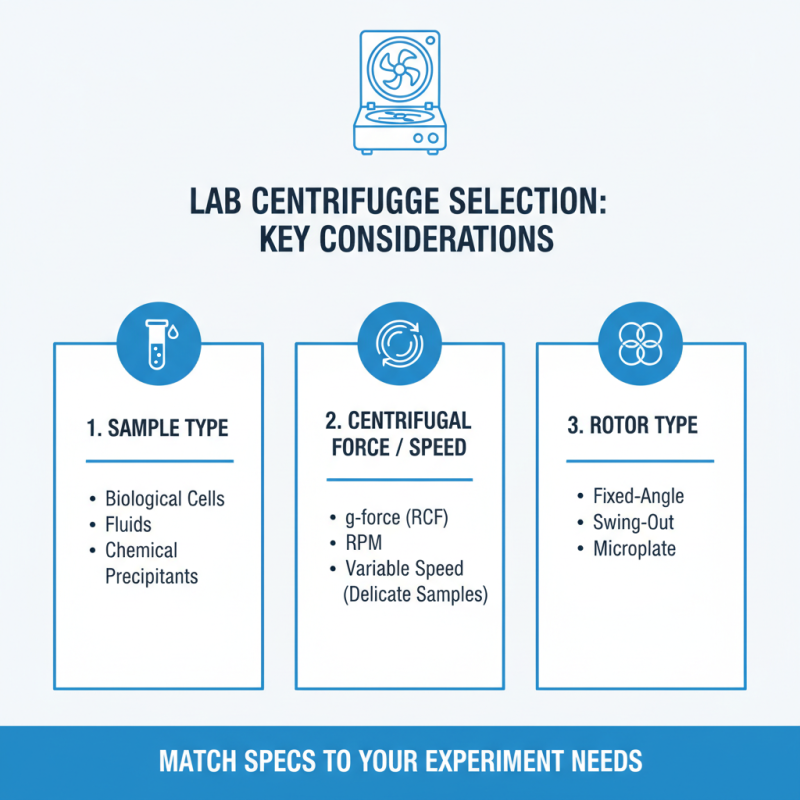
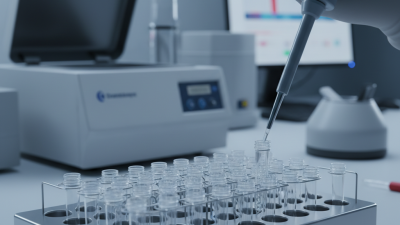
Choosing the right lab centrifuge is crucial for successful experiments. Various factors influence this choice. These factors include the specific application, sample types, and required speed. A suitable centrifuge can enhance efficiency and precision in results.
Lab centrifuges come in different models and sizes. Each is tailored for unique purposes, whether for DNA extraction or cell separation. It's essential to understand your laboratory requirements clearly. Not all centrifuges are equal. Some might not fit your needs, leading to suboptimal outcomes.
Investing in a reliable lab centrifuge pays off. However, it's easy to overlook critical features. For instance, consider the rotor type and compatible tubes. A lack of attention to such details might hinder your experiment. Reflecting on your choices can lead to better decisions in the long run.
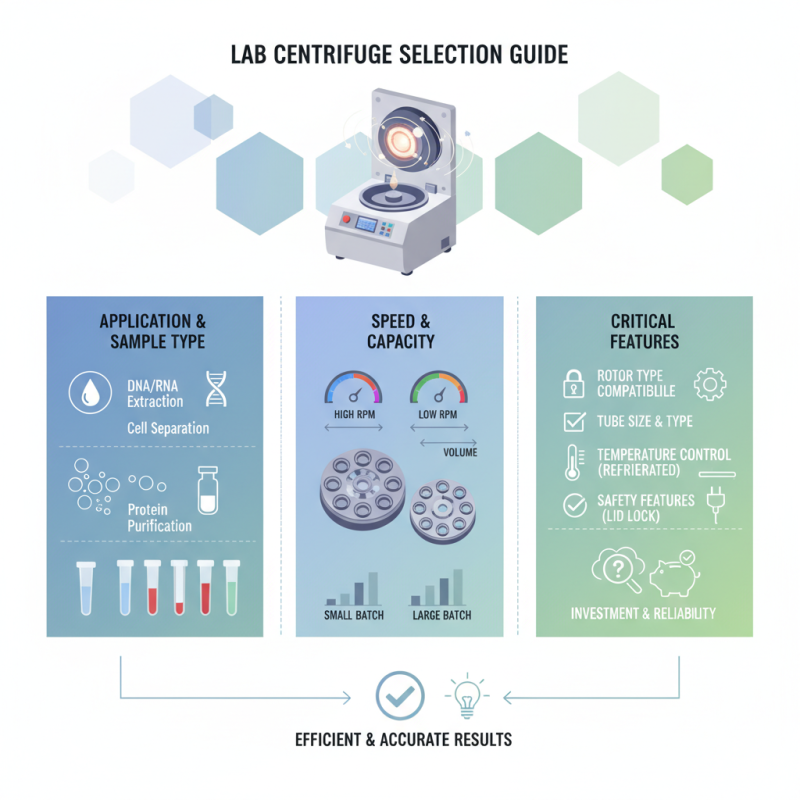
Choosing the right lab centrifuge is critical for achieving accurate results in your experiments. One must consider the type of samples being processed. Different samples require different centrifugal forces and rotor types. For instance, working with delicate biological samples may necessitate a variable-speed centrifuge to minimize damage during separation. It's essential to match these specifications with your specific needs.
Another crucial factor is the centrifuge's capacity. Consider the volume of samples you typically work with. A larger capacity can save time during batch processing, but it may also require more power and larger space in your lab. Balancing space and efficiency can be a common dilemma.
Safety features are equally important. Ensure the centrifuge has appropriate locking mechanisms and warning alarms. These features can prevent accidents during high-speed operations. However, not every centrifuge includes comprehensive safety options. Reflecting on whether your current equipment meets safety standards is vital. There’s always room for improvement, even in established protocols.
When selecting a centrifuge for research, understanding the types is crucial. There are mainly two categories: analytical and preparative centrifuges. Analytical centrifuges provide precise measurements of sedimentation rates. They are essential for determining the size and density of particles. These instruments often operate at higher speeds, enabling the analysis of small sample volumes.
Preparative centrifuges, on the other hand, are geared toward separating larger volumes. These can vary significantly in size and capacity. Some focus on isolating specific components, like proteins or cells. They use varying rotor designs to accommodate different applications. For instance, swinging bucket rotors facilitate maximal separation for large sample volumes. Fixed-angle rotors are ideal for faster sedimentation but may require more sample preparation.
Despite their capabilities, users must be cautious. Over-speeding a centrifuge can lead to sample degradation. Additionally, improper balancing can damage the instrument. It’s important to regularly check calibration to ensure reliability. Understanding these nuances improves experimental outcomes. Consider both your sample requirements and the centrifuge's operational specifications before making a choice.
When choosing a lab centrifuge, understanding the specifications is vital. Speed, capacity, and rotor types play crucial roles in determining which centrifuge suits your experiments best. Speed, measured in revolutions per minute (RPM), directly influences the separation efficiency. Most modern centrifuges can reach speeds between 3,000 to 20,000 RPM. For instance, a centrifuge operating at 10,000 RPM can provide effective separation for many biological samples, while higher speeds usually cater to more specialized needs.
Capacity also matters a great deal. Typical laboratory centrifuges have a capacity ranging from 1.5 to 4 liters. Larger capacities are preferable for batch processing, but they may compromise the separation quality for smaller samples. Researchers often face a dilemma here; larger rotors can handle more samples at once but may not perform well with small volumes. A study published in the Journal of Clinical Laboratory Analysis suggests that optimizing rotor size can significantly increase separation quality.
Rotor types deserve careful consideration. Fixed-angle rotors are efficient for separating particles, but swinging bucket rotors provide better sample recovery, especially for larger particles. It’s essential to evaluate the specific requirements for your applications carefully. The wrong rotor can lead to suboptimal results, necessitating a reevaluation of your centrifugation strategy. Reliable references and industry-specific data can assist in making informed decisions.
When selecting a lab centrifuge, safety features must be a priority. Ensure that the centrifuge includes a lid lock, which prevents operation when the lid is not securely closed. This simple feature can prevent spills and accidents. Additionally, choose a centrifuge with a rotor that is properly balanced. An imbalanced rotor may lead to unexpected vibrations, risking damage to both the equipment and samples.
Maintenance is crucial for the longevity of any centrifuge. Regular cleaning helps avoid contamination. Wipe down the rotor chamber after use. Pay attention to any signs of wear. Loose screws or worn bearings may indicate the need for professional servicing. Make a habit of checking the calibration of your centrifuge. Even small inaccuracies can lead to significant differences in your results.
Remember to keep a log of maintenance and usage. This documentation can help identify patterns in malfunction and improve your safety practices. An informed approach to maintenance and safety can make a significant difference in the reliability of your experiments.
When selecting a lab centrifuge, budgeting is crucial. Costs can vary widely based on features and capacity. Assess your specific needs before diving into specifications. Consider the maximum speed and sample volume necessary for your experiments. High-speed models are often more expensive but may be essential for certain applications. Balance the need for speed with what you can afford.
Maintenance costs are another important factor. Some centrifuges require regular servicing, which can add up over time. Look for models with user-friendly designs that minimize upkeep. Additionally, consider the energy efficiency of the unit. A centrifuge that consumes less power will save money in the long run.
While it’s tempting to opt for the cheapest option, this decision can lead to problems. Low-cost centrifuges might lack precision or durability. Reflect on past experiences with budget equipment. It is often wiser to invest in a more reliable unit. Determine a middle ground where you can enjoy cost-effectiveness without compromising quality.
| Centrifuge Type | Max Speed (RPM) | Max Capacity (Liters) | Price Range (USD) | Energy Efficiency Rating |
|---|---|---|---|---|
| Benchtop Centrifuge | 15,000 | 2 | $1,000 - $3,000 | A |
| Microcentrifuge | 20,000 | 0.5 | $500 - $2,000 | B |
| Ultracentrifuge | 100,000 | 0.1 | $10,000 - $40,000 | C |
| Refrigerated Centrifuge | 15,000 | 3 | $2,500 - $5,000 | A |
| High-Performance Centrifuge | 30,000 | 4 | $5,000 - $15,000 | A+ |