Customer Service

10 Tips for Choosing the Right FPGA Chip for Global Sourcing

Choosing the right Fpga Chip for global sourcing is a practical engineering decision, not a simple price comparison. A device that looks affordable may create hidden costs through limited supply, complex software tools, or difficult certification work. Procurement teams must examine logic capacity, memory resources, I/O standards, power consumption, package type, and development support. A chip selected for a prototype may fail when production volumes increase.

Details matter.

An experienced sourcing process compares authorized distributors, manufacturer records, lifecycle notices, and regional inventory. It also checks whether the supplier can provide traceability, genuine documentation, and stable quality controls. Technical teams should test timing margins, thermal behavior, signal integrity, and configuration reliability under realistic conditions. A board running correctly in a quiet laboratory may behave differently inside a hot industrial cabinet. Global logistics adds another layer, including lead times, customs requirements, packaging protection, and replacement planning. These factors shape the ten practical tips in this guide.

No checklist removes every risk. Engineers can misjudge future demand, while buyers may trust a familiar supplier too quickly. That mistake deserves attention. A small pilot order, independent sample inspection, and documented approval process can expose weaknesses before a larger commitment. Vendor responsiveness also matters when a toolchain breaks or a discontinued part threatens production. Reliable decisions come from combining verified data with hands-on testing, honest supplier communication, and periodic review. The best Fpga Chip is not always the newest or cheapest option. It is the component that remains technically suitable, commercially available, and supportable across its expected service life.
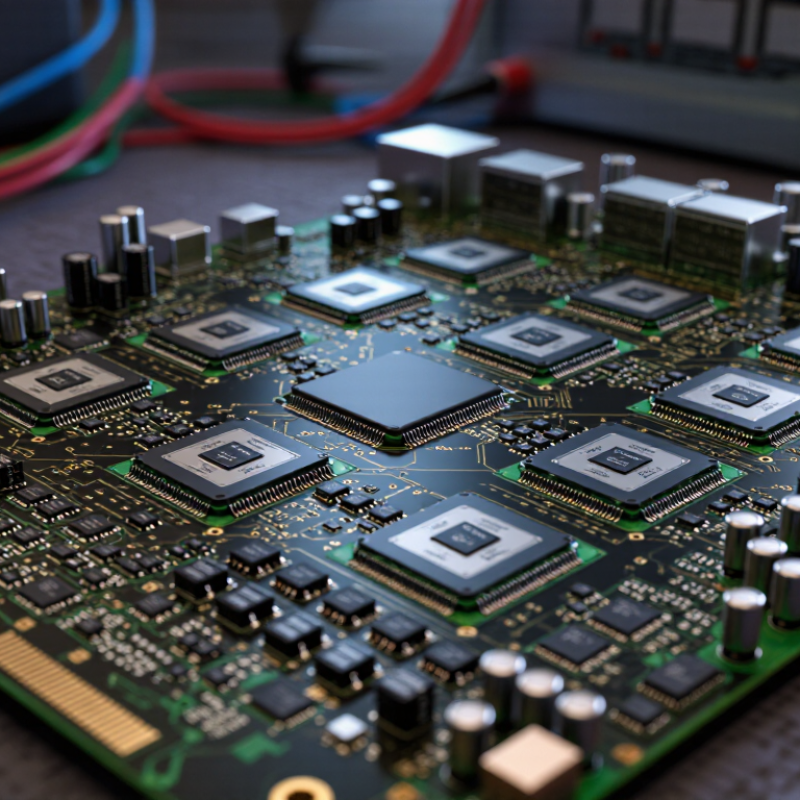
10 Tips for Choosing the Right FPGA Chip for Global Sourcing

Define the FPGA Requirements for the Target Application

Choosing the right FPGA chip begins with defining the target application, not browsing distributor catalogs. Start with constraints. Describe every input, output, protocol, and timing relationship. A camera gateway may need high-speed serial links, deterministic latency, and several voltage domains. A motor controller may prioritize PWM resolution, ADC interfaces, and fault response. Record required logic cells, memory blocks, digital signal-processing units, clock ranges, and package dimensions. Then add 30% capacity headroom for firmware changes and design errors. That allowance is practical, but not universal.

Power and temperature require measured values. Estimate static and dynamic power at the highest realistic workload, then test an engineering sample under airflow limits. Check industrial temperature ratings, configuration time, radiation tolerance, and long-term availability. WSTS forecast global semiconductor sales at 611.2 billion dollars for 2024, a 16% annual increase. Gartner separately projected 624 billion dollars, showing forecast uncertainty and continued supply pressure. Do not treat either figure as an FPGA guarantee. Define approved package types, acceptable process nodes, and at least one qualified alternative device. Verify toolchain support, intellectual-property licensing, security features, and programming hardware before selecting the part. That assumption fails. A low-cost device can become expensive after thermal redesign, software migration, or unexpected allocation delays. Keep a traceable requirement matrix, and validate it with actual signal measurements rather than simulation alone.

Compare FPGA Architecture, Performance, and Resource Capacity

Choosing an FPGA for global sourcing starts with architecture, not a familiar part number. Logic-cell counts alone can mislead. A device with balanced lookup tables, registers, and configurable routing may outperform a larger device in a crowded design. Review the architecture diagram, memory blocks, digital signal-processing units, clock networks, and high-speed interfaces. This is where practical engineering experience matters. A board that works in the laboratory may fail after temperature, voltage, and production tolerances shift.

Performance should be measured with your workload, not a headline frequency. Build a small benchmark using real packet sizes, filter stages, image frames, or control loops. Record latency, throughput, timing margin, and power under sustained operation. Check how easily the design closes timing after routing. One overlooked congestion zone can consume weeks. I have seen resource estimates look comfortable until wide buses and duplicated control logic filled the fabric. The first estimate was wrong. That mistake was useful.

Resource capacity needs practical headroom. Compare logic elements, embedded memory, multiplier capacity, transceivers, I/O banks, and available clock regions. Leave room for firmware changes, safety monitoring, and future interfaces. A 70 percent utilization target is not a law, but it is safer than designing at the edge. Confirm tool support, package availability, lifecycle data, and independent electrical specifications across sourcing regions. Documentation quality is evidence of reliability. Still, supplier data deserves verification through samples and repeat tests. Small inconsistencies matter.

10 Tips for Choosing the Right FPGA Chip for Global Sourcing

Compare FPGA architecture, performance, and resource capacity across representative device classes.

These class-level reference values reflect typical FPGA planning ranges rather than any specific manufacturer or product. Higher-density architectures generally provide more logic cells, embedded memory, DSP resources, and faster serial connectivity, but they may also increase power consumption, cooling requirements, and sourcing cost.

Evaluate Power Consumption, Thermal Design, and Operating Conditions

Tip 1: Measure power beyond the datasheet’s typical figure. FPGA consumption changes with clock rate, logic utilization, memory access, and I/O voltage. Use realistic workloads during supplier evaluation. The International Energy Agency reported that data centers consumed about 415 TWh globally in 2024. That figure may approach 945 TWh by 2030. Small design choices now can affect operating costs later. Ask suppliers for static, dynamic, and standby measurements. Request test conditions, not just one attractive number.

Tip 2: Treat thermal design as a sourcing requirement. ASHRAE TC 9.9 recommends an inlet range of 18–27°C for common air-cooled equipment. Your enclosure may operate near the upper limit. Check airflow direction, heat-sink clearance, fan curves, and board spacing. In real evaluations, a chip can pass laboratory tests but fail inside a crowded cabinet. That gap deserves attention. Thermal simulation helps, although it is never a perfect substitute for chamber testing.

Tip 3: Match the device with its operating environment. Review humidity, altitude, vibration, storage limits, and temperature cycling against IEC 60068 test methods. Confirm industrial-grade availability when equipment faces warehouses, factories, or outdoor cabinets. I would not trust a single supplier declaration without traceable test records. Ask for production-lot data, failure-rate evidence, and change-notification procedures. A spreadsheet can still miss an overheated connector, an undersized regulator, or unstable airflow during peak load.

10 Tips for Choosing the Right FPGA Chip for Global Sourcing - Evaluate Power Consumption, Thermal Design, and Operating Conditions
No. Evaluation Dimension Key Data to Compare Practical Screening Benchmark Global Sourcing Verification
1 Logic Capacity Logic elements or configurable logic blocks, lookup tables, flip-flops, and available device utilization after implementation. Select a device that keeps normal design utilization near 50–75%, leaving room for timing closure, engineering changes, and feature growth. Compare equivalent capacity definitions because vendors may describe logic resources using different counting methods.
2 Static and Dynamic Power Quiescent power, estimated dynamic power, total board power, clock activity, toggle rate, and power at the intended voltage rails. Use a power-estimation tool with actual clock frequencies, I/O standards, switching activity, memory use, and operating temperature. Do not size the regulator from typical power alone. Request power data for minimum, typical, and maximum conditions, including process, voltage, and temperature variation.
3 Thermal Design Maximum junction temperature, thermal resistance from junction to ambient or case, package type, airflow, heat sink, and enclosure conditions. Verify that calculated junction temperature remains below the specified maximum with design margin under worst-case ambient temperature and airflow. Check whether the same package is available in all target regions and whether the thermal model assumes a specific PCB layer stack or airflow rate.
4 Operating Temperature Specified commercial, industrial, or extended temperature range; storage temperature; start-up and operation limits. Common industrial screening uses approximately −40 to +85 °C ambient, while some devices support higher junction temperatures. Use the exact device rating for qualification. Confirm that temperature ratings apply to the complete device and package, not only to selected speed or grade variants.
5 Supply Voltage and Power Integrity Core voltage, auxiliary voltage, I/O bank voltage, tolerance, ramp requirements, sequencing, decoupling, and transient current. A modern FPGA commonly uses a low-voltage core rail around 0.85–1.2 V, while I/O rails may range from about 1.2–3.3 V depending on the selected standard. Check regulator availability, allowed voltage tolerances, power-up sequencing, and regional availability of qualified passive components.
6 I/O Compatibility Number of user I/Os, supported electrical standards, differential pairs, I/O bank grouping, voltage compatibility, and signal rate. Confirm that each interface fits within one compatible I/O bank and that the required single-ended or differential voltage standard is supported at the target speed. Review package pin maps and regional assembly constraints before layout because pin-compatible substitutions are not guaranteed.
7 Memory and DSP Resources Embedded block RAM, distributed memory, digital signal-processing blocks, multiplier widths, external memory interfaces, and error-correction options. Reserve sufficient on-chip memory and DSP capacity for the highest-throughput operating mode instead of sizing only for the initial prototype. Validate memory configuration, initialization behavior, and external-memory support across the exact device, package, and speed grade.
8 Performance and Timing Margin Maximum clock frequency, speed grade, setup and hold requirements, phase-locked-loop resources, and critical-path slack. Target positive timing slack at the highest specified voltage and temperature; avoid relying on nominal laboratory results as production limits. Confirm that the required speed grade is available through the expected supply channel and that alternate lots retain the same timing specifications.
9 Configuration and Security Configuration memory type, boot time, external memory requirements, power-on behavior, encryption, authentication, and readback protection. Choose a configuration method that meets system start-up time, field-update, recovery, and intellectual-property protection requirements. Check export, import, cryptographic, and regional compliance requirements before selecting security features for international distribution.
10 Lifecycle, Quality, and Traceability Production status, expected availability period, package and date-code traceability, qualification reports, counterfeit controls, and change-notification policy. Prefer devices with documented lifecycle status, controlled change management, lot traceability, and qualification data appropriate to the end application. Use authorized procurement channels where possible and require certificates of conformity, lot information, inspection records, and documented storage conditions.
Screening values are general engineering references rather than universal device limits. Final selection should be based on the exact FPGA datasheet, power model, package thermal data, qualification documentation, and system-level validation.

Check Vendor Reliability, Supply Stability, and Global Availability

Choosing the Right FPGA Chip for Global Sourcing

Vendor reliability should be tested with evidence, not polished presentations. In sourcing projects, I have learned to request audited quality records and traceability documents. Ask for proof. Review factory capacity, engineering support, and change-notification procedures. A reliable vendor should explain how defects are contained and reported. Check response times with practical questions about last-time buys, testing, and replacement options.

Supply stability requires more than a quoted lead time. Review historical delivery data across different quarters. Confirm wafer, packaging, and testing capacity before approving the design. Avoid relying on one distributor or one regional warehouse. No forecast is perfect. Build a modest safety stock for products with long qualification cycles. Also inspect the vendor’s product lifecycle policy. Unexpected revisions can force costly board changes.

Global availability depends on regional inventory and dependable logistics. Ask whether stock is held in several approved locations, not only one central facility. Verify customs documentation, export classifications, and local compliance responsibilities before shipment. Keep written records of promised allocations and delivery windows. I once accepted an attractive price without checking regional support. That mistake delayed prototype testing by several weeks. A lower-cost source may become expensive when technical replies arrive slowly. Review the complete supply chain quarterly, because conditions change faster than datasheets.

Assess Total Cost, Technical Support, and Long-Term Scalability

10 Tips for Choosing the Right FPGA Chip for Global Sourcing

The lowest unit price rarely represents the real purchasing cost. I compare chip prices, freight, customs handling, testing, storage, and expected failure rates. A ten-cent saving can disappear after one delayed shipment. Check supply terms carefully. Ask whether pricing changes with volume, currency, or regional delivery.

Technical support deserves equal attention. Request clear datasheets, reference designs, simulation models, and programming guidance before placing a large order. Test response times with practical questions. Can engineers explain timing errors, heat limits, and configuration failures? A useful support team should provide reproducible answers, not vague promises. In my experience, missing documentation creates more expense than a slightly higher component price. I once underestimated debugging time. That mistake was costly.

Long-term scalability should shape the selection. Review available logic resources, memory options, I/O standards, package choices, and development tools. Leave room for future features. A design that barely fits today may become difficult to maintain next year. Check lifecycle policies, approved manufacturing locations, and second-source possibilities. Also evaluate whether the same architecture can serve different product versions. More capacity is not always better. It can increase power use, board complexity, and validation work. Build a small technical sample before committing globally. Record temperature behavior, configuration time, and support quality. Real evidence beats a polished quotation.

Translate »