How to Choose the Right High Speed Centrifuge for Your Laboratory?
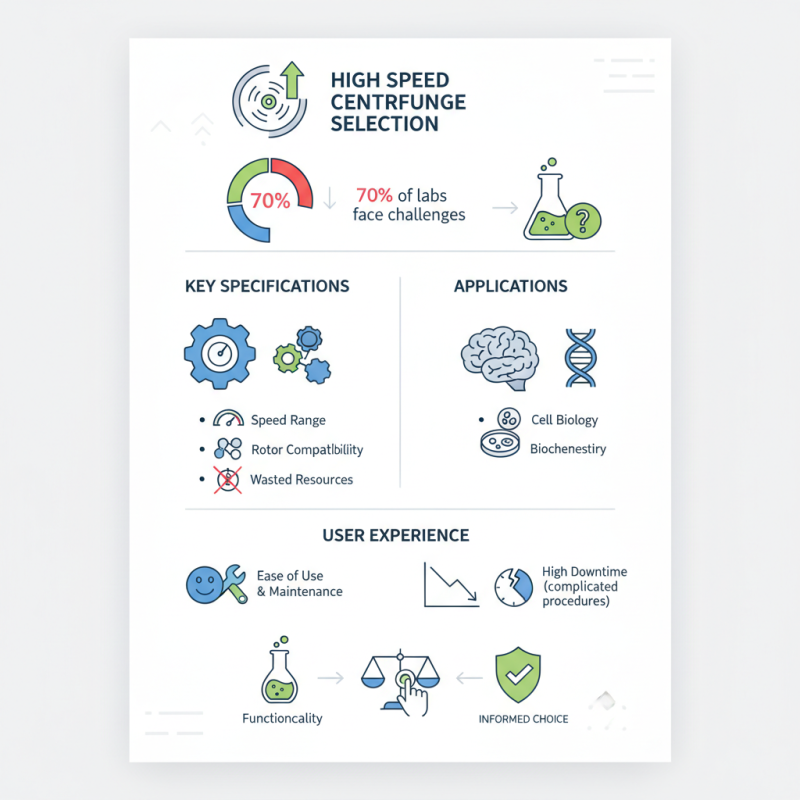
Choosing the right high speed centrifuge is vital for laboratory efficiency. In recent industry reports, it has been noted that over 70% of laboratories face challenges in selecting suitable centrifuge models. This can lead to workflow inefficiencies and compromised analytical results. A high speed centrifuge is crucial in applications ranging from cell biology to biochemistry.
Understanding the specifications is essential. For instance, the speed range and rotor compatibility are key factors in making an informed choice. Laboratories often overlook these details, leading to underperformance. Additionally, improper selection can waste resources and time, highlighting the need for careful consideration.
User experience also plays a role. Feedback from laboratory professionals indicates that ease of use and maintenance are often undervalued. Some facilities have reported high downtime due to complicated operational procedures. Thus, reflection on practical needs is necessary to avoid hasty decisions. Choosing the right high speed centrifuge requires balancing functionality with usability.
Factors to Consider When Selecting a High-Speed Centrifuge
Choosing the right high-speed centrifuge can significantly impact your laboratory's efficiency. One key factor to consider is the centrifuge's maximum speed. Different applications require varying speeds. For instance, cell culture and protein purification might need higher speeds than routine sedimentation tasks. Evaluating your specific requirements is essential.
Another important aspect is the rotor type. Fixed-angle rotors are great for pelleting, while swinging bucket rotors offer better separation for volume. The balance between speed and rotor design affects sample integrity. Be mindful of the material used for the rotors, as this impacts durability and safety during operation.
**Tips:** Always check for compatibility with your sample types. Some materials can degrade or react under high-speed conditions. Also, evaluate the sample volume; larger volumes will need more power and time. Lastly, consider maintenance and support options. A centrifuge can be a long-term investment, so plan for its care in advance.
High-Speed Centrifuge Selection Factors
This chart illustrates key factors to consider when selecting a high-speed centrifuge for your laboratory, including maximum speed, capacity, weight, noise level, and price.
Types of High-Speed Centrifuges and Their Applications
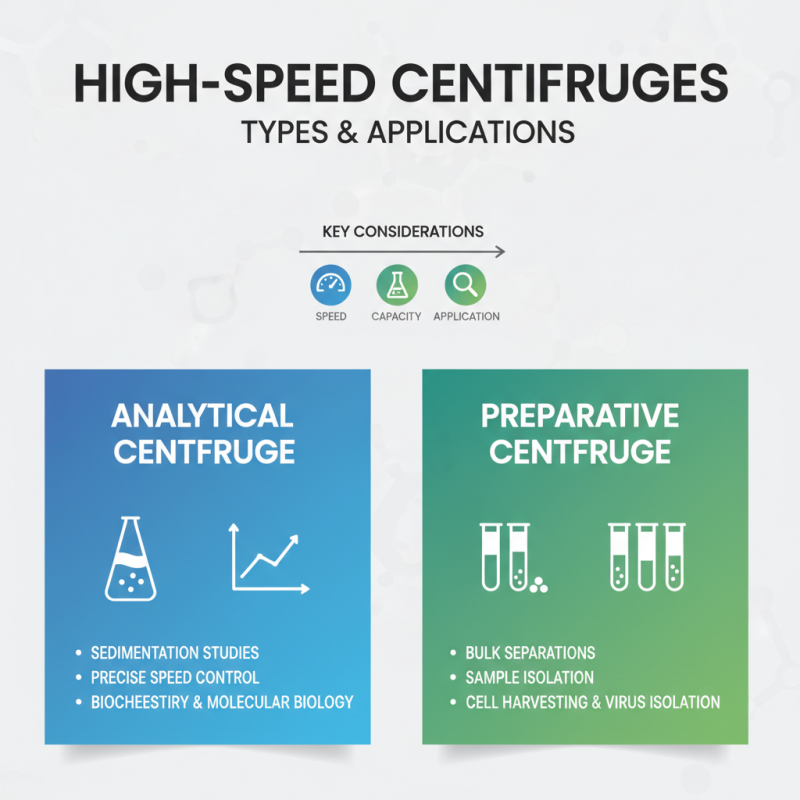
When selecting a high-speed centrifuge, it's essential to understand the different types available. Each type serves specific applications in the laboratory. For instance, analytical centrifuges are great for sedimentation studies. They provide precise speed control and allow for rapid separation of particles. This type is perfect for research in biochemistry and molecular biology.
Another category is the preparative centrifuge. These centrifuges are designed for larger volumes. They excel in isolating cells, organelles, and proteins. They can separate samples at high speeds, aiding in various fields such as pharmaceuticals and clinical diagnostics. It's crucial to know the sample types you will work with, as this influences your choice.
Tips: Be aware of the maximum speed and capacity needed. It’s vital for efficiency. Regularly check for calibration and maintenance needs to ensure optimal performance. If you find a model that seems perfect but doesn’t fit all your requirements, reconsider. It may save you time and cost in the long run. Always consult with colleagues or experts to avoid making hurried decisions.
Understanding Rotor Types and Their Importance in Centrifuges
When selecting a high-speed centrifuge, understanding rotor types is crucial. Each rotor type serves unique purposes and optimal applications.
Fixed-angle rotors are common. They hold samples at a fixed angle to the axis, providing efficient sedimentation for most routine tasks. Swinging bucket rotors offer versatility. They allow samples to swing out during operation, which is great for larger volumes.
Tips: Consider the sample volume you'll process. This helps determine the rotor size and capacity. Also, think about the required speed and g-force levels. Not all rotors can reach ultra-high speeds.
Be wary of compatibility issues. Some rotors are designed for specific applications. Using the wrong rotor can lead to inconsistent results. Review your experimental needs meticulously. Reflect on the materials and sizes of your samples too. The choice of rotor impacts the quality of your results significantly.
Key Features and Specifications to Evaluate in a Centrifuge
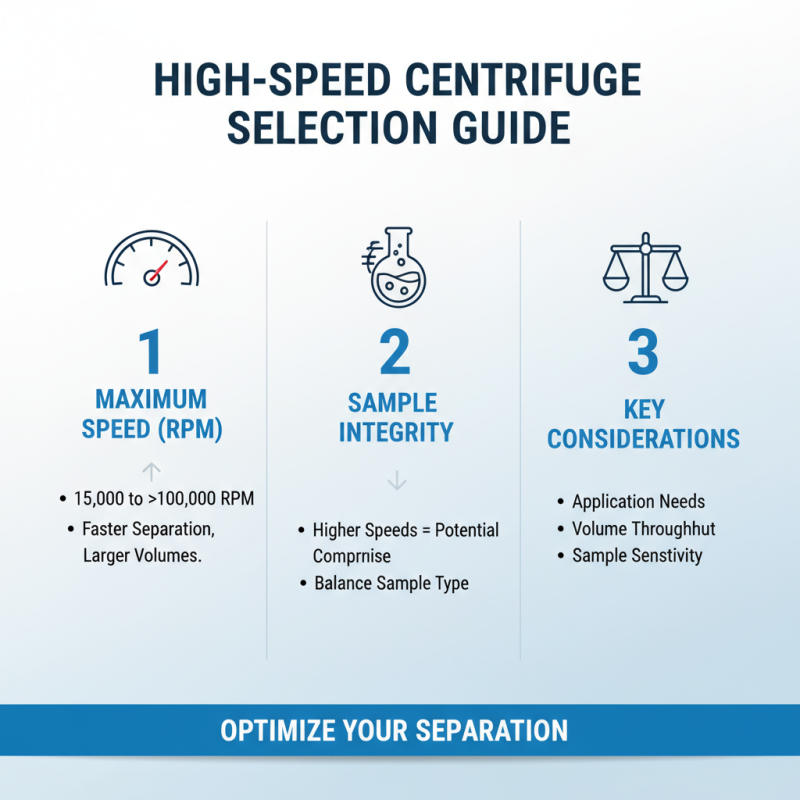
When selecting a high-speed centrifuge, it’s crucial to assess key features and specifications. Consider the maximum speed, usually measured in RPM. Centrifuges range from 15,000 to over 100,000 RPM. According to industry reports, higher speeds effectively separate larger volumes in shorter times. However, higher speeds may compromise sample integrity. Balance your need for speed with the type of samples used.
Next, evaluate the rotor options available. Fixed-angle rotors are common but may not suit all applications. Swing-bucket rotors offer flexibility for different container types. Researchers indicate that choosing the right rotor can lead to more efficient separations. Also, take note of the capacity. Many contemporary centrifuges allow for 4 to 8 liters, catering to varying laboratory needs. In contrast, some entries may fall short, limiting efficiency in large sample processing.
Temperature control is another critical feature. Many high-speed centrifuges provide cooling mechanisms, which help protect sensitive samples during centrifugation. If you’re working with delicate materials, investing in these types may be wise. However, systems with advanced controls often come with complexities that require significant training. It’s essential to weigh the benefits against operational challenges.
Budgeting and Cost-Effectiveness in High-Speed Centrifuge Procurement
When selecting a high-speed centrifuge, budgeting is crucial. Laboratories often operate with tight financial constraints. Spending too much can limit future purchases. Start by determining your budget range based on the essential features your lab needs.
Consider the overall cost-effectiveness of your choices. Higher-priced models may offer advanced features that enhance productivity. However, assess whether these features will yield sufficient returns. Some may find that basic models suffice for routine tasks. In contrast, advanced options could become unnecessary luxuries.
Think about long-term maintenance costs. Cheaper models might require more frequent repairs, leading to higher expenses over time. Evaluate warranties and support from suppliers. A reliable service can save money in the long term. Ultimately, weigh your specific research needs against budget realities. This balance can guide you toward a centrifuge that meets both functionality and fiscal responsibility.
How to Choose the Right High Speed Centrifuge for Your Laboratory? - Budgeting and Cost-Effectiveness in High-Speed Centrifuge Procurement
| Centrifuge Model |
Maximum Speed (RPM) |
Maximum Capacity (Liters) |
Price Range (USD) |
Operational Cost (Annual) |
| Model A |
20,000 |
2.0 |
$5,000 - $7,000 |
$500 |
| Model B |
15,000 |
1.5 |
$3,500 - $5,000 |
$400 |
| Model C |
18,000 |
2.5 |
$8,000 - $10,000 |
$600 |
| Model D |
22,000 |
3.0 |
$6,500 - $8,500 |
$550 |