Customer Service

China Best Barley Grass Juice Powder Supplier?

barley grass juice powder is moving from niche wellness shelves into mainstream functional nutrition. Market research remains fragmented, however. Grand View Research reports continued growth in the global superfoods market, supported by demand for plant-based nutrition and convenient powdered products. Future Market Insights also identifies rising interest in green food ingredients, especially among consumers seeking concentrated, easy-to-use formats.

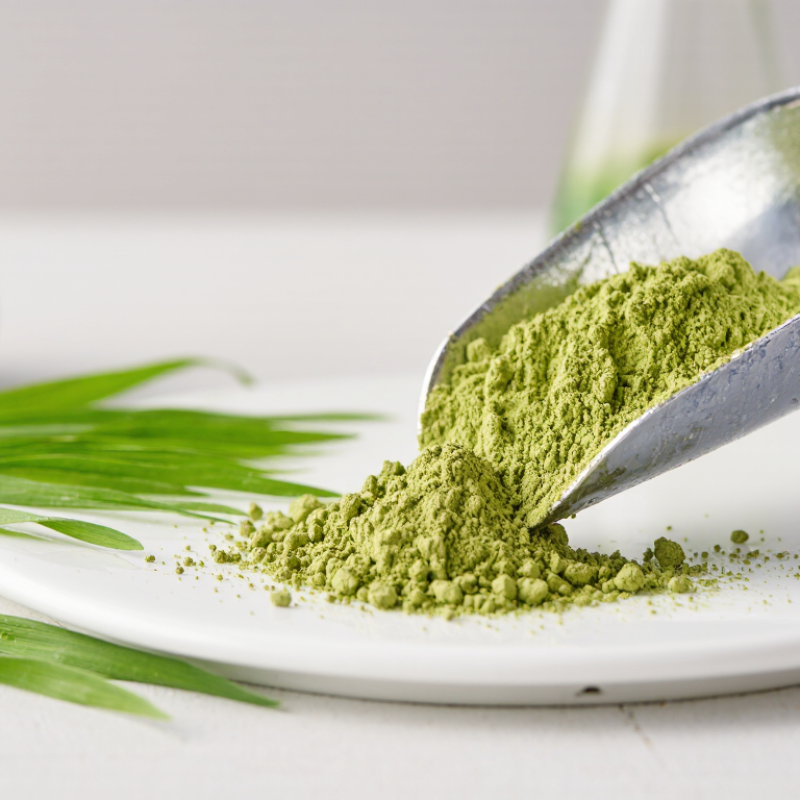
The raw material is young barley grass, usually harvested before grain formation. It is then pressed, dried, and milled into powder. A teaspoon can turn a glass of water bright green, with a fresh, grassy smell. The nutritional profile depends on cultivar, soil, harvest timing, drying temperature, and testing methods. That detail matters.

Dr. Yoshihide Hagiwara, a Japanese physician and barley-grass researcher, described barley grass as “one of nature’s most nourishing foods.” His work helped popularize concentrated green-food products, although modern buyers should examine evidence carefully. Traditional enthusiasm is not the same as clinical proof.

Quality separates credible suppliers from attractive labels. Buyers should request certificates of analysis, pesticide screening, heavy-metal results, microbiological testing, and verification of chlorophyll or nutrient claims. Organic certification may add confidence, but it does not replace batch testing. Some supplier pages overstate benefits. That deserves skepticism.

This guide examines how to evaluate a Barley Grass Juice Powder supplier, including sourcing, processing, certifications, packaging, and export reliability. Industry forecasts are useful, but they are not guarantees. Market figures vary by research company, product definition, and region. A careful purchasing decision should combine data, documentation, sensory checks, and practical experience.
China Best Barley Grass Juice Powder Supplier?

Barley Grass Juice Powder: Definition, Processing, and Key Industry Metrics

China Best Barley Grass Juice Powder Supplier?

Barley grass juice powder is made from young barley leaves that are pressed into juice and dehydrated. It differs from ordinary barley grass powder, which uses the whole dried leaf. This distinction affects color, solubility, taste, and nutritional testing.

Processing usually begins with controlled harvesting, rapid washing, and cold or low-temperature juicing. The liquid is filtered before spray drying or freeze drying. Some processes use approved carriers to improve powder flow and stability. Moisture, water activity, bulk density, mesh size, and reconstitution time are practical industry metrics. A bright green powder may look attractive, but color alone proves little.

Reliable evaluation needs batch records, laboratory testing, and traceability from field to finished packaging. Common checks include microbiological safety, pesticide residues, heavy metals, moisture, and active nutrient profiles. In production reviews, I would also compare juice yield and drying loss. These figures can expose inconsistent raw material quality. No single metric tells the whole story.

Supplier assessment can still be imperfect. Test results may vary with harvest season, soil, equipment, and laboratory method. A product dissolving quickly is not automatically superior. Buyers should request recent certificates, representative samples, storage data, and clear processing details. Transparent answers matter. So does independent verification.

China’s Supply Base: Production Capacity, Certifications, and Export Data

China’s barley grass juice powder supply base includes farms, drying facilities, extract processors, and export traders. A serious supplier should explain each stage, not only quote a low price. Production capacity matters, but usable capacity matters more. Ask for annual output, current monthly availability, harvest periods, and backup processing lines.

Certificates should match the product and destination market. Useful evidence may include HACCP, GMP, ISO 22000, organic certification where applicable, and recent third-party laboratory reports. Check testing for pesticide residues, heavy metals, microbiological safety, moisture, and chlorophyll content. A complete certificate is not enough. Verify its issuer, validity, product scope, and batch connection.

Export data can reveal practical experience. Review shipment history, destination regions, container frequency, and typical order sizes. Customs records may show activity, but they do not always prove factory ownership or product quality. Request commercial invoices, packing lists, certificates of analysis, and traceability records from raw material to finished powder. Batch codes should lead to real production details.

I would not judge a supplier from capacity figures alone. Some numbers describe theoretical output during peak seasons. Actual delivery can be smaller. This is easy to overlook. An on-site audit, video inspection, or independent factory assessment can expose storage limits, sanitation gaps, and inconsistent equipment maintenance. Even experienced buyers can misread export volume as manufacturing strength. Supplier selection should compare verified evidence, not polished claims.

Quality Benchmarks: Moisture, Microbial Limits, Heavy Metals, and MRLs

China Best Barley Grass Juice Powder Supplier?

When evaluating a barley grass juice powder supplier, quality begins with measurable specifications. Moisture commonly stays below 5–8%, depending on processing and packaging. Excess moisture can cause clumping, color changes, and microbial growth. Ask for lot-specific results, not only a general product sheet. Microbial testing should cover total plate count, yeast, mold, and relevant pathogens. Results should identify the test method and sampling date.

Heavy metals require particular attention. Lead, arsenic, cadmium, and mercury should be tested through a competent laboratory, preferably using ICP-MS. Limits vary by destination market and product category. Pesticide maximum residue limits, or MRLs, also differ between countries. A reliable supplier should provide current MRL screening, traceable batch numbers, and complete certificates of analysis. A perfect-looking certificate can still reflect weak sampling. That point is easy to overlook.

Tips: Request a sealed sample from the exact production lot. Check its odor, color, flow, and moisture after opening. Review laboratory accreditation, test dates, and detection limits. Packaging matters too; a moisture barrier helps protect powder during storage. No certificate replaces verification. An independent pre-shipment test may reveal gaps before purchase.

China Best Barley Grass Juice Powder Supplier? - Quality Benchmarks: Moisture, Microbial Limits, Heavy Metals, and MRLs
Quality Category Test Parameter Recommended Benchmark Typical Test Method Quality-Control Rationale
Physical and Chemical Quality
Moisture Loss on drying / moisture content ≤ 5.0% w/w AOAC 925.10 or validated gravimetric/oven method Helps reduce caking, oxidation, and microbial growth during storage. The exact commercial specification should be validated for the product format and packaging.
Water activity aw ≤ 0.60 Measured at 25°C using a calibrated water-activity meter Provides a more direct indication of microbial growth potential than moisture alone.
Identity Botanical identity and plant part Matches declared barley grass (Hordeum vulgare L.) juice powder Macroscopic or microscopic examination, authenticated reference material, and/or validated DNA or chromatographic testing Confirms that the material is barley grass juice powder rather than another cereal grass or a blended ingredient.
Foreign matter Visible foreign materials Absent or within the buyer’s approved specification Visual inspection and validated sieving procedure Supports cleanliness and prevents contamination by soil, stones, insects, or packaging fragments.
Solubility / dispersibility Powder behavior in water Uniform dispersion with no abnormal sediment or off-odor Buyer-approved in-house method using a defined powder-to-water ratio Useful for evaluating consumer performance and batch-to-batch consistency.
Microbiological Quality
Total aerobic microbial count TAMC ≤ 100,000 CFU/g ISO 4833-1 or equivalent validated method A practical release benchmark commonly used for powdered botanical and food-supplement materials; destination-country requirements may differ.
Yeasts and molds TYMC ≤ 1,000 CFU/g ISO 21527-2 or equivalent validated method Controls fungal spoilage and helps identify inadequate drying or storage conditions.
Escherichia coli Presence / absence Absent in 10 g ISO 16649 series or equivalent validated method Indicates hygienic control during cultivation, processing, and packing.
Salmonella spp. Presence / absence Absent in 25 g ISO 6579-1 or equivalent validated method A key food-safety criterion for dry plant powders and dietary-ingredient products.
Staphylococcus aureus Coagulase-positive staphylococci Absent or below the applicable destination-market limit ISO 6888 series or equivalent validated method Additional hygiene indicator, especially where the product is handled after drying.
Bacillus cereus Spore-forming foodborne bacteria ≤ 1,000 CFU/g as a commonly used internal benchmark ISO 7932 or equivalent validated method Useful for monitoring contamination from soil and raw agricultural materials. Confirm the buyer’s regulatory specification.
Heavy Metals and Elemental Contaminants
Lead Pb Target ≤ 3.0 mg/kg; comply with the importing market’s legal maximum ICP-MS or ICP-OES after microwave digestion; AOAC or equivalent validated method Lead limits are legally defined by product category and jurisdiction. A product-specific regulatory check is required before release.
Cadmium Cd Target ≤ 1.0 mg/kg; comply with the importing market’s legal maximum ICP-MS or ICP-OES after microwave digestion Cadmium can accumulate in plants from soil and irrigation sources; limits vary by market and food category.
Arsenic Total arsenic and, where relevant, inorganic arsenic Report total arsenic; assess inorganic arsenic when required by the destination market ICP-MS; speciation by HPLC-ICP-MS where required Total arsenic alone does not distinguish the more toxic inorganic species. The applicable legal limit depends on product classification.
Mercury Hg Target ≤ 0.10 mg/kg; comply with the importing market’s legal maximum ICP-MS, cold-vapor AAS, or equivalent validated method Although mercury is generally less associated with terrestrial plants than some other contaminants, periodic verification supports raw-material control.
Pesticide Residues and MRL Compliance
Multi-residue pesticide screen Active substances relevant to barley cultivation and processing region Each pesticide ≤ the applicable destination-market MRL QuEChERS extraction followed by LC-MS/MS and GC-MS/MS MRLs are substance-specific and jurisdiction-specific. A single universal “pesticide-free” value is not scientifically or legally appropriate.
EU default MRL approach Pesticides without a specific EU MRL Generally 0.01 mg/kg under the EU default MRL rule, unless another provision applies Method validated at or below the applicable reporting and enforcement level Check the current EU Pesticides Database and the correct crop or commodity classification before making a compliance decision.
Glyphosate and relevant herbicides Glyphosate, AMPA, and other regionally relevant herbicides ≤ the applicable MRL for the intended market LC-MS/MS with matrix-appropriate extraction and validation Herbicide limits differ among the EU, United States, China, and other markets; the buyer should specify the required regulatory database.
Residue reporting Detected compounds, LOQ, and MRL comparison Report result, LOQ, MRL, and pass/fail status for every analyte Laboratory report with analyte list and current regulatory references Transparent reporting is essential because “not detected” is meaningful only when the laboratory’s LOQ is stated.
Traceability and Release Documentation
Certificate of Analysis Batch-specific COA Required for every production lot Issued by an ISO/IEC 17025-accredited laboratory or qualified quality laboratory Should include batch number, production date, test dates, methods, results, units, specifications, and authorized approval.
Traceability Farm, harvest, processing, and packaging records One-step-back and one-step-forward traceability Document review and mock-recall verification Supports investigation of contamination, recall readiness, and verification of country-of-origin claims.
Storage and packaging Moisture barrier, temperature, and humidity control Sealed moisture-barrier packaging; storage conditions defined on the label Packaging inspection and stability or shelf-life study Powder quality can deteriorate through moisture pickup, oxidation, light exposure, or repeated opening.
Important: The values shown are practical procurement and release benchmarks, not a universal legal standard. Final acceptance criteria must be confirmed against the current regulations of the intended sales market, the product’s legal classification, customer specifications, and the latest official MRL and contaminant databases.

Supplier Comparison: Chlorophyll, Mesh Size, COA Results, and Traceability

China Best Barley Grass Juice Powder Supplier?

A serious supplier comparison starts with chlorophyll, not a bright green photograph. Ask for chlorophyll content on a dry-weight basis, the test method, and the batch number. UV-visible testing can produce different results from HPLC-based analysis. This detail matters. One certificate without a method proves little.

Mesh size affects dispersion and mouthfeel. A 60-mesh powder may feel gritty in water, while an 80-mesh powder usually disperses more evenly. However, finer is not always better. Excessive milling can increase heat exposure and reduce freshness. Request sieve-analysis data, moisture content, and drying temperature. I would compare the actual result with the specification, not only the promised target.

The COA should include aerobic plate count, yeast and mold, Salmonella, heavy metals, and pesticide residues. AOAC Official Method 2015.01 supports ICP-MS testing for multiple elements, while ISO 4833-1 and ISO 6579-1 provide recognized microbial methods. Codex CXS 193-1995 offers a reference for contaminants. EFSA’s 2023 pesticide-residue report found 96.3% of tested food samples within legal limits, but barley grass still needs batch-specific evidence. Traceability should reach the farm plot, harvest date, drying line, milling record, and warehouse pallet. ISO 22005 supports this approach. A gap in one record deserves questions. Price alone is weak evidence.

Best-Supplier Checklist: MOQ, Lead Time, Pricing, Samples, and Audits

Choosing the best barley grass juice powder supplier requires more than comparing prices. Request the MOQ, production capacity, and standard lead time in writing. A practical supplier should explain harvest timing, drying methods, packaging, and storage conditions clearly. Ask whether the quoted price includes testing, documentation, and shipping. The lowest price can hide important costs.

Samples should come from a normal production batch, not a specially prepared showcase batch. Check color, aroma, solubility, moisture, and taste against the specification. Request a recent certificate of analysis covering microbiological safety, heavy metals, pesticides, and identity. Reliable suppliers should provide batch numbers and traceability records. Audits are valuable, but a remote questionnaire is not enough. Review facility photos, quality procedures, and corrective-action records. I have seen polished documents reveal little about daily production. That deserves caution.

Tips: Compare landed costs, not unit prices. Confirm sample fees and refund terms. Ask how the supplier handles failed tests, delayed shipments, and damaged cartons. Visit the facility when volume justifies the expense. Keep every specification, approval, and change request documented. A flexible MOQ may help a new buyer, but unstable lead times can disrupt retail planning. Suppliers should also explain their quality team’s experience and testing frequency without vague promises.

Translate »