Customer Service

What Is the Best 3 Phase Socket from China?

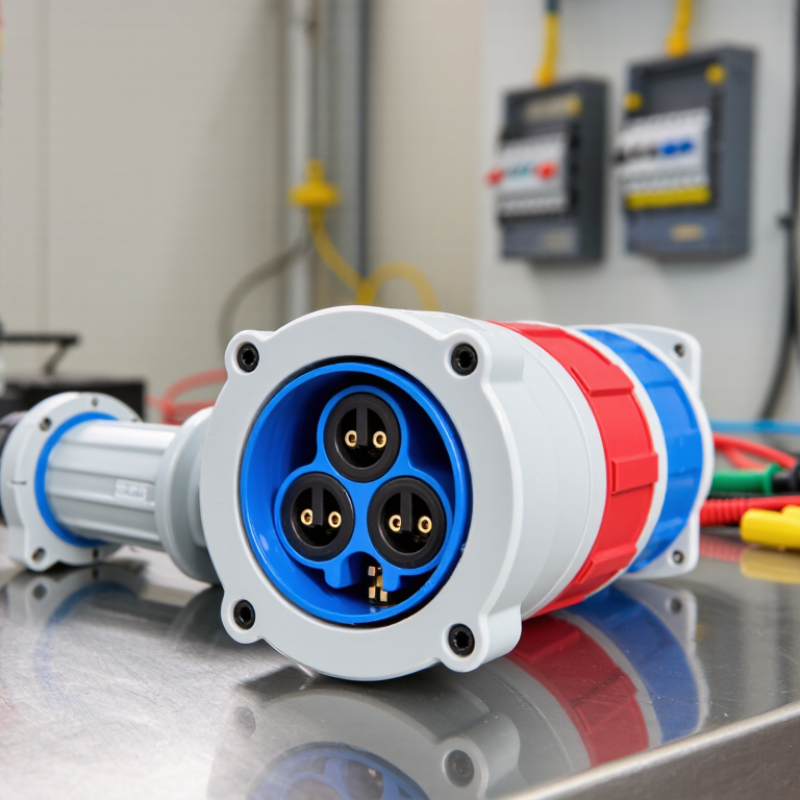
Choosing the best 3 Phase Socket from China requires more than comparing prices or polished product photos. The right choice depends on current rating, voltage, frequency, pole configuration, installation method, and environmental conditions. A socket used beside a clean indoor machine may need different protection than one exposed to dust, moisture, vibration, or frequent plugging.

Reliable Chinese manufacturers usually provide clear datasheets, dimensional drawings, material information, and test documentation. Look for heat-resistant housing, secure terminals, strong contact pressure, and durable insulation. IP ratings matter in demanding locations. Certification should match the destination market and the intended application. A professional supplier should explain these details without avoiding difficult questions.

Ask for samples before placing a larger order. Check the fit, terminal markings, screw quality, and temperature rise during practical testing. A factory audit can also reveal assembly standards, inspection procedures, and production consistency. Do not rely only on a company website. References, traceable test reports, and responsive technical support provide stronger evidence.

The cheapest option may become expensive after failures, downtime, or replacement work. Still, “best” is not universal. A premium industrial socket may be unnecessary for a light-duty installation. My own evaluation would remain cautious because supplier claims can differ from field performance. That is why a balanced selection considers safety, compatibility, lifecycle cost, delivery reliability, and after-sales communication. Choose evidence over attractive promises.

What Is the Best 3 Phase Socket from China?

What Is a Three-Phase Socket and How Does It Work?

What Is the Best 3 Phase Socket from China?

A three-phase socket connects equipment to three alternating-current supply lines. Unlike a single-phase outlet, it delivers power through three conductors, spaced 120 degrees apart. Each phase reaches its peak at a different moment. This arrangement supports smoother motor operation and higher power transfer. No magic here. The rotating magnetic field helps industrial motors start and run efficiently. IEC 60309-2 specifies important requirements for industrial plugs and socket-outlets, including configuration, current rating, and voltage identification.

When a machine is connected, current travels through the three live phases and returns through the electrical system. The phase angle reduces torque pulsation in motors. A protective earth conductor provides a safer fault path. Socket designs may also include mechanical or color coding to prevent mismatched connections. The IEA Electricity 2024 report expects global electricity demand to grow by about 4% in 2024 and 2025. That growth increases demand for dependable industrial connections. Still, higher demand does not make every socket suitable.

For China-made three-phase sockets, the best choice is not always the highest-rated model. Confirm voltage, frequency, poles, amperage, ingress protection, and cable size. Check test reports and traceable production records. An installer should inspect contact pressure, terminal temperature, and enclosure strength under load. A socket can look excellent while its terminals loosen after repeated heating. That is a real weakness. Product documentation is sometimes treated as optional, but it should be part of the purchase decision. Reliable sourcing needs technical evidence, not attractive photographs.

What Is the Best 3 Phase Socket from China? - What Is a Three-Phase Socket and How Does It Work?
Evaluation Dimension Common Specification or Option Typical Technical Data How It Works or Why It Matters Recommended Selection Criteria
Electrical Supply Three-phase AC power 380–415 V line-to-line; 50 Hz is common in China and many international markets Three alternating currents are separated by approximately 120 electrical degrees, providing smoother power delivery for motors and balanced loads. Confirm the local grid voltage, frequency, phase sequence, and installation regulations before ordering.
Rated Current Industrial socket ratings 16 A, 32 A, 63 A, or 125 A The rated current indicates the continuous current the socket and plug are designed to carry under specified operating conditions. Choose a rating equal to or higher than the protected circuit load. Do not use a higher-rated socket to compensate for undersized cables or protection devices.
Number of Contacts 3P+E or 3P+N+E 3P+E: three phases plus protective earth; 3P+N+E: three phases, neutral, and protective earth The three phase contacts supply three-phase loads. The neutral contact supports line-to-neutral loads, while the earth contact provides a fault-current path. Use 3P+E for balanced three-phase equipment. Use 3P+N+E when the equipment includes single-phase circuits or requires a neutral conductor.
Typical Pole Configuration Four-pole or five-pole socket 4-pole: L1, L2, L3, PE; 5-pole: L1, L2, L3, N, PE Correct pole configuration prevents incorrect wiring and ensures all required conductors are available at the equipment connection point. Match the socket pole count with the equipment plug, cable, circuit breaker, and wiring diagram.
Voltage Coding IEC 60309-style color and clock-position coding Red is commonly used for industrial three-phase voltages above 50 V; 400 V applications commonly use the 6h earth-pin position Color and clock-position systems help prevent connection of equipment to an incompatible voltage configuration. Verify the exact voltage and clock position rather than relying on color alone, especially for export installations.
Ingress Protection IP44, IP54, IP67, or similar IP44: protection against solid objects over 1 mm and water splashes; IP67: dust-tight and protected during temporary immersion The IP rating describes resistance to dust and water when the socket is correctly installed and any cover is properly closed. IP44 is suitable for many sheltered industrial areas. Select IP54 or higher for dusty locations and IP67 for wet or washdown environments.
Housing Material Thermoplastic or metal enclosure Common materials include impact-resistant polyamide, rubberized elastomer, and coated metal The enclosure protects live contacts from impact, contamination, and accidental contact while supporting mechanical durability. Look for UV resistance, impact resistance, flame-retardant properties, and temperature suitability for the installation environment.
Contact Material Copper alloy contacts Common contact finishes include nickel-plated or silver-plated surfaces Conductive contacts transfer current between the plug and socket. Surface plating can improve corrosion resistance and contact stability. Check contact thickness, terminal construction, corrosion resistance, and compatibility with the expected current and duty cycle.
Cable Entry Straight, angled, or panel-mounted entry Common cable-entry systems include screw terminals, cable glands, and strain-relief clamps A secure cable entry prevents conductor movement and reduces mechanical stress on terminals and contact points. Confirm the allowable cable diameter, conductor cross-section, bending space, and strain-relief method.
Switching and Isolation Switched or unswitched socket Switched versions may include an integral isolator or interlock mechanism An isolating switch can disconnect the load before the plug is removed. Interlocks can help prevent plug insertion or removal while energized. Use a switched or interlocked design where frequent connection, maintenance, or operator safety requires local isolation.
Mechanical Durability Industrial-duty construction Typical design features include reinforced housings, locking collars, and spring-loaded covers Mechanical features help maintain contact pressure and protect the connection during vibration, repeated plugging, and handling. Assess expected mating cycles, impact exposure, vibration, outdoor use, and the required locking method.
Thermal Performance Continuous-load capability Actual temperature rise depends on current, ambient temperature, conductor size, terminal torque, and enclosure ventilation Excessive heat can result from overloading, loose terminals, poor contact pressure, or inadequate cable sizing. Select a certified current rating and install conductors and protective devices according to the applicable electrical code.
Standards and Compliance Industrial plug and socket standards IEC 60309-1 and IEC 60309-2 are widely used references for industrial plugs, socket-outlets, and couplers Standards define important requirements such as dimensions, contact arrangements, voltage identification, temperature limits, and testing. Request current test reports, conformity documentation, dimensional drawings, and traceable product specifications for the target market.
Best Overall Choice Heavy-duty three-phase industrial socket 400 V, 16–32 A for general equipment; 63–125 A for higher-power machinery; IP44 or higher depending on the environment A suitable socket combines correct electrical configuration, adequate current capacity, environmental protection, secure cable termination, and recognized compliance documentation. For most industrial applications, prioritize correct 3P+E or 3P+N+E configuration, suitable IP rating, certified construction, reliable terminals, and compatibility with the complete power system.

Which Standards and Safety Features Define a Quality Socket?

What Is the Best 3 Phase Socket from China?

A quality three-phase socket begins with the correct standard, not a low quotation. For industrial applications, IEC 60309-1 defines general requirements, while IEC 60309-2 controls pin configuration and interchangeability. In China, buyers should also check the applicable GB/T 11918 series and request current test reports. The voltage, frequency, current rating, and pole arrangement must match the equipment. Do not guess.

Safety details matter during daily use. Look for an IP rating under IEC 60529, such as IP44 for splash protection or IP67 for temporary immersion. A durable enclosure should resist impact, heat, ultraviolet exposure, and chemical contact. Protective earth should connect reliably, preferably with a leading or robust grounding contact. Spring-loaded covers, strain relief, secure cable glands, and mechanical interlocks reduce accidental exposure and loose connections. Fit matters.

NFPA’s Home Structure Fires report for 2016–2020 found electrical distribution and lighting equipment involved in about 25% of reported home fires. Industrial sockets face harsher conditions, including dust, vibration, and repeated plugging. One weakness remains: a certificate cannot reveal every assembly mistake. Inspect terminal torque, contact pressure, sealing quality, and temperature-rise results. A sample may pass testing, yet production consistency can still fail. Ask for traceable batch records, calibrated test equipment, and independent verification. Shortcuts are expensive.

How to Compare China-Made Three-Phase Socket Types

What Is the Best 3 Phase Socket from China?

How to Compare China-Made Three-Phase Socket Types

China-made three-phase sockets should be compared by operating conditions, not appearance. The IEA’s Electricity 2024 report expects global electricity demand to grow by about 3.3% annually through 2026. The IEA’s Global EV Outlook 2024 also recorded more than four million public charging points worldwide in 2023. This expansion increases demand for stable industrial connections. Record voltage, current, frequency, pole count, and installation environment. Numbers matter.

IEC 60309-1:2021 provides the basic dimensional and safety framework for industrial plugs and socket-outlets. Check the correct clock position and rated current. Then inspect contact thickness, terminal torque, heat resistance, and cable entry. IEC 60529 IP ratings help compare dust and water protection. Testing depends on correct installation. IP ratings are not magic. An IP67 housing can still fail when its cable gland is poorly tightened.

During supplier evaluation, request test reports, material declarations, batch traceability, and production samples. Use a thermal test under the intended load, not merely a continuity check. Measure terminal temperature after sustained operation. Compare replacement parts and technical support, too. Cheap options can look efficient. I would not trust a polished sample alone. Factory data may omit derating for heat, altitude, or bundled cables. That uncertainty deserves a written question before purchase.

What Materials and Ratings Suit Different Industrial Applications?

What Is the Best 3 Phase Socket from China?

What Materials and Ratings Suit Different Industrial Applications?

Choosing a three-phase socket starts with the working environment, not the lowest quotation. Indoor workshops often suit polyamide or impact-resistant plastic housings with IP44 protection. These materials are light, insulating, and practical around machinery. For outdoor yards or washdown areas, rubber-coated housings and IP67 protection offer better resistance to water, dust, and rough handling. They cost more. That difference is usually justified.

Contact materials matter under continuous loads. Nickel-plated brass or copper-alloy contacts can reduce oxidation and maintain stable conductivity. For common equipment, 16A or 32A sockets may be sufficient. Large pumps, welders, and compressors may require 63A or 125A versions. Check voltage, frequency, pole configuration, and earthing carefully. A higher current rating is not automatically safer. Poor cable sizing can still create dangerous heat.

In factory inspections, I would request samples before approving bulk production. Test insertion force, terminal tightness, insulation resistance, and temperature rise under realistic loads. Confirm that the enclosure rating matches independent test evidence and applicable IEC 60309 requirements. Some suppliers describe plastic as “industrial grade” without defining its temperature range or impact performance. That wording needs challenge. Chemical plants may require specialized seals and corrosion-resistant contacts, while food-processing sites need smooth, cleanable surfaces. One detail is easy to miss: a socket exposed to vibration may need stronger cable anchoring than a higher IP rating.

How to Choose a Reliable Chinese Three-Phase Socket Supplier

What Is the Best 3 Phase Socket from China?

China offers many three-phase socket manufacturers, but price alone is a weak selection guide. A reliable supplier should explain rated current, voltage, frequency, pole count, and installation method clearly. Ask for samples before placing a large order. Inspect contact pressure, terminal strength, housing thickness, and heat resistance. The socket must suit your equipment, cable size, enclosure, and working environment. An appropriate IP rating matters in dusty or damp workshops.

Tips: Request recent test reports, material declarations, and production photos with visible dates. Confirm that testing covers the exact model, not a similar product. Check factory controls for incoming materials, assembly torque, and final electrical inspection. Ask how defective units are recorded, analyzed, and replaced. Some suppliers provide polished documents but limited production evidence. That deserves caution.

During supplier reviews, small details often reveal reliability. A capable manufacturer should offer clear drawings, stable specifications, traceable batches, and practical technical support. Independent inspection before shipment can reduce risk, especially for a first order. Still, certificates may be incomplete or outdated. Verify important documents with the issuing organization when possible. I would also test several samples under realistic loads, because laboratory performance may not reflect daily installation conditions. Clear communication matters. If answers change after payment discussions, reconsider the supplier.

Translate »