Customer Service

2026 Best ODM O Ring Rubber Manufacturer for Global Buyers

Global buyers entering 2026 face a practical question: which ODM O Ring Rubber Manufacturer can deliver dependable sealing performance, not merely attractive quotations? O-rings support hydraulic cylinders, pneumatic valves, pumps, filtration systems, and energy equipment. A small defect can create leakage, downtime, product recalls, or expensive field service.

Industry data shows why supplier evaluation matters. Grand View Research’s Industrial Rubber Market report identifies automotive, machinery, and industrial applications as major demand drivers, with continued growth expected through the decade. Smithers’ global rubber industry analysis also highlights tighter quality expectations, material traceability, and regional supply resilience. These trends favor manufacturers that can combine formulation expertise, tooling control, and stable production capacity.

A capable ODM O Rubber Ring Manufacturer should begin with application details. Temperature, pressure, media exposure, compression set, hardness, and installation conditions all influence compound selection. NBR may suit mineral oils, while EPDM commonly serves hot water and weathering environments. FKM can support higher chemical and temperature resistance, but it often raises cost. Small details matter.

Look for ISO 9001 systems, controlled mixing records, dimensional inspection, and batch traceability. ISO 3601 guidance can help verify critical O-ring dimensions and tolerances. Independent testing adds confidence. Still, certificates alone are not enough. A supplier may pass an audit and disappoint during volume production. That risk deserves honest attention.

The strongest partners provide samples, inspection reports, mold-flow feedback, packaging protection, and corrective-action records. They communicate clearly when a design needs revision. For global procurement teams, the best 2026 choice is not simply the lowest-cost factory. It is the manufacturer that proves repeatability, documents decisions, and accepts responsibility when reality differs from the drawing.
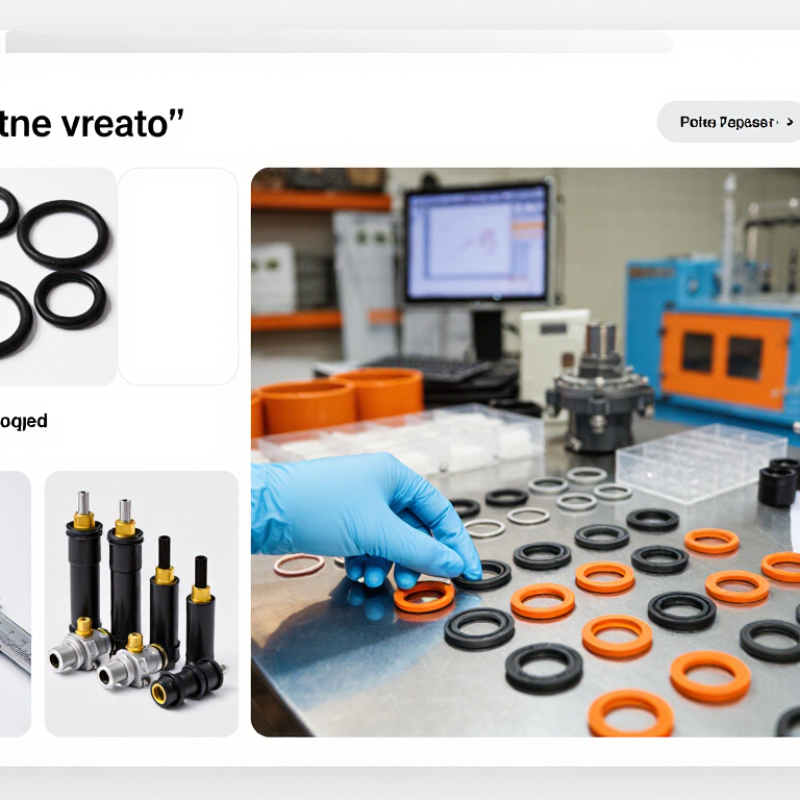
2026 Best ODM O Ring Rubber Manufacturer for Global Buyers

What an ODM O-Ring Rubber Manufacturer Provides in 2026

An ODM O-ring rubber manufacturer in 2026 does more than reproduce a drawing. It turns a sealing requirement into a manufacturable component. Engineers review pressure, temperature, media, groove dimensions, and assembly speed. They may suggest a different compound when oil exposure weakens the original choice. This practical review prevents costly redesigns later. Good ODM work starts with questions.

The service often includes material formulation, mold development, sampling, and production validation. A reliable team records batch numbers, curing conditions, dimensional results, and test data. During sampling, technicians check flash, surface marks, compression set, and cross-section accuracy. A sample should survive pressure cycling, heat aging, and chemical contact relevant to its application. Reports should explain both passing results and limits. Traceability matters.

Global buyers also need export-ready packaging, labeling, inspection plans, and responsive technical communication. Clear drawings can reduce translation errors between purchasing and production teams. Still, no supplier can predict every field condition from a spreadsheet. An early prototype may swell slightly or seal too tightly. That is not failure if the team measures it, explains it, and corrects the mold or compound. I would ask for retained samples and a corrective-action record before approving volume production. This small discipline exposes weak process control.

How to Define O-Ring Requirements for Global Applications

For a global application, an O-ring requirement should begin with the sealing environment, not a preferred rubber grade. Record the medium, operating temperature, peak pressure, motion, exposure time, and installation method. A hydraulic valve may need a different compound from a food-processing fitting, even when both use the same nominal size. Define the groove diameter, cross-section, tolerances, squeeze, stretch, and surface finish. Small dimensional gaps can create large leakage risks.

Experienced sourcing teams also request material hardness, compression-set limits, resistance data, and cleanliness requirements. State whether the seal faces oil, steam, fuel, chemicals, dust, or outdoor weather. Specify applicable international standards and inspection methods without assuming one standard fits every market. Ask an ODM manufacturer for a drawing review, prototype samples, test records, and batch traceability. Request packaging that protects against ozone, heat, light, and deformation during long-distance transport. Keep records.

A useful specification includes acceptance criteria that inspectors can measure. Examples include hardness range, visual defects, dimensional limits, leakage rate, and aging performance. Test conditions should mirror actual service, including pressure cycles and temperature changes. Lab data alone is not enough. Installation trials often reveal twisting, swelling, or unexpected extrusion. A perfect specification is rarely possible. Leave room to learn. Recheck assumptions after the first sample, because a seal that passes a bench test may fail during assembly. Reliable global supply also depends on controlled formulation, consistent curing, and documented change management. That detail is easy to overlook.

How to Evaluate Materials, Tooling, and Production Capabilities

Selecting an ODM O-ring manufacturer requires more than comparing unit prices. The 2024 Grand View Research analysis valued the global industrial rubber market at approximately USD 40.95 billion in 2023. This scale increases material variation and supplier risk. Request compound data, not only a generic rubber name. Check hardness, tensile strength, elongation, compression set, and fluid compatibility. Temperature claims should match real operating cycles, including heat spikes and chemical exposure.

Tooling deserves equal attention. Ask whether the mold design controls flash, parting lines, venting, and cavity balance. A small flash ridge can damage sealing surfaces during assembly. ISO 3601 provides dimensional guidance for many O-ring applications. However, standard dimensions cannot replace application testing. Confirm mold steel, expected tool life, shrinkage assumptions, and revision control. I still distrust a perfect first sample. It may hide unstable curing conditions.

Production evidence should include batch traceability, mixing records, cure-curve monitoring, and statistical process control. The U.S. Department of Energy reports that compressed-air leaks can waste 20–30% of compressor output, showing how small sealing failures create measurable losses. Ask for compression-set results after realistic aging, not only fresh laboratory results. Independent testing adds credibility. One weakness remains common: suppliers sometimes provide impressive certificates without linking them to your exact compound and tooling. Require sample reports, inspection limits, and corrective-action records before approving volume production.

How to Verify Quality, Compliance, and Supply Chain Reliability

For global ODM O-ring buyers, quality verification must begin with evidence, not attractive samples. Request the compound specification, drawing revision, batch number, and material certificate. Check hardness, tensile strength, elongation, compression set, and leakage performance against agreed standards. ISO Survey 2023 recorded 1,265,216 ISO 9001 certificates worldwide, yet certification alone cannot prove product consistency. Review internal audit findings, calibration records, nonconformance reports, and corrective-action closure rates.

Compliance needs a clear paper trail. Ask whether materials meet applicable chemical restrictions, environmental requirements, and customer-specific testing rules. A reliable manufacturer should provide traceability from raw compound to packed O-rings. Test reports should show laboratory equipment, test methods, dates, and sample identification. Missing details matter. They often reveal weak control.

Supply reliability requires more than a promised delivery date. The World Bank’s 2023 Logistics Performance Index compares 139 economies through customs, infrastructure, tracking, and timeliness. Use similar measures for supplier evaluation. Check tooling ownership, backup equipment, approved subcontractors, safety-stock policies, and change-notification procedures. Request twelve months of on-time delivery data, not one impressive shipment. A factory may pass an audit and still depend on one mixing machine. That is a real risk. Small pilot orders, witnessed inspections, and periodic requalification create stronger evidence than paperwork alone. Mistakes still happen; the important question is whether the supplier finds them early and responds transparently.

2026 Best ODM O-Ring Rubber Manufacturer for Global Buyers

Typical continuous service-temperature ranges by elastomer commonly used in industrial O-rings.

Use this chart as an initial material-screening reference. Actual temperature performance depends on compound formulation, pressure, media compatibility, compression, and validation testing. Global buyers should also verify ISO 9001 certification, batch traceability, third-party test reports, regulatory documentation, and delivery performance before approving an ODM supplier.

How to Select and Manage the Best Global ODM Partner

Selecting a global ODM O ring partner starts with evidence, not attractive catalog photos. Ask for production records, material traceability, dimensional inspection data, and recent process-control reports. A capable manufacturer should explain compound selection, hardness tolerance, compression-set testing, and mold maintenance in plain language. Request samples made with the proposed rubber grade and tooling route. Samples can mislead. Check how the team handles technical drawings, revisions, and unclear specifications. That conversation often reveals more than a sales presentation.

Manage the relationship through a written quality plan. Define critical dimensions, visual limits, packaging, inspection frequency, and acceptance criteria before mass production. Keep approved samples and revision-controlled drawings at both sites. For international shipments, confirm labeling, pallet protection, lead times, export documents, and a practical response process for delays. Schedule video audits and periodic production reviews. Ask to see the mixing room, molding presses, trimming area, and final inspection bench. Photos help, but live evidence is stronger. Remote audits have limits.

A reliable ODM partner reports problems early, even when the news is uncomfortable. Require corrective-action records with owners, deadlines, and verification results. Review delivery consistency, rejection rates, response time, and engineering support each quarter. Do not choose only by unit price; unstable tooling or late changes can cost more. No partner is perfect. We once underestimated the effect of small drawing changes on sealing performance, a mistake worth documenting and preventing. Leave room for honest feedback, pilot runs, and controlled improvement. Document each change before production resumes.

Translate »